Processing
Wet Processing
Quick answer
Wet processing is the sequence of unit operations that turns ripe cherry into dry parchment: reception and floatation, pulping, fermentation, washing and grading, an optional soak, and drying. Each step has a defined endpoint and a characteristic failure mode, and fermentation is judged by feel and by the wash water rather than by the clock.
Reception and floatation
Cherry arrives and is immediately assessed and separated. Floatation in a reception tank is the first mechanical control: ripe, dense cherry sinks; over-ripe, insect-damaged, dried and hollow cherry floats and is skimmed off. Hand sorting catches what floatation does not.
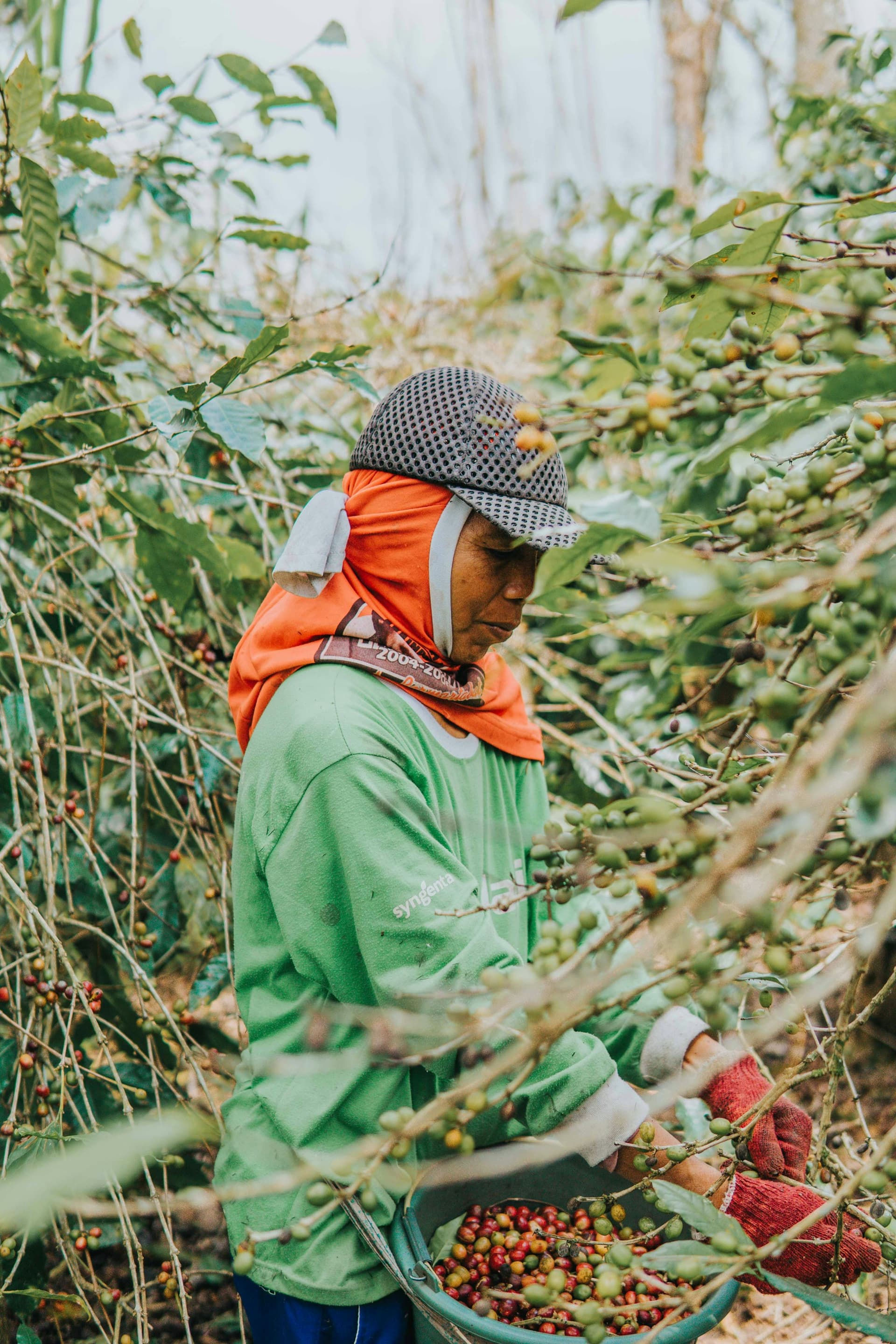
Everything downstream is limited by what happens here. A station that accepts mixed-ripeness deliveries cannot recover the resulting cup later, at any stage.
- Cherry reception, floatation and sorting
- Pulping — skin and pulp removed
- Fermentation, 12–36 hours
- Washing and channel grading
- Optional clean-water soak
- Drying in parchment to target moisture
- Rest in parchment
- Hulling, screening and sorting
Pulping
A pulper strips the skin and most of the pulp from the seed by pressing the cherry between a moving surface and a fixed one, sized so that the seed passes and the skin does not. Correct clearance setting is the whole job: too tight and the seed is bruised and cut; too loose and unpulped cherry passes through into the fermentation tank.
- Cut and bruised beans are a pulper setting problem and appear as a defect class in the green.
- Unpulped cherry in the tank ferments differently from pulped parchment and produces localised over-fermentation.
- Pulping should follow reception quickly. Cherry held overnight before pulping begins fermenting inside the fruit.
Fermentation
The mucilage is a pectin layer bound to the parchment. Fermentation uses the naturally present microbial population to break it down so it can be washed off. Duration is commonly 12 to 36 hours in East Africa, driven by ambient temperature and altitude — cold high-altitude stations run long, warm low-lying ones run short.
| Fault | Cause | Cup signature |
|---|---|---|
| Over-fermentation | Held too long, or too warm | Sour, vinegary, onion-like; phenolic in severe cases |
| Under-fermentation | Stopped too early | Mucilage residue stains parchment, slows drying, gives dull dirty cups |
| Uneven fermentation | Poor tank mixing, mixed delivery times | Inconsistent cups within one lot |
| Stalled fermentation | Very low temperature | Extended duration with increasing spoilage risk |
Washing, grading channels and the soak
Washing removes the broken-down mucilage. In East Africa this is frequently done in grading channels — long troughs in which the parchment is agitated and moved with water. Denser parchment settles and moves slowly; lighter parchment floats forward. The channel is therefore a density separation as well as a washing step, and the separations it produces are often kept apart through drying.
The soak follows in Kenya and commonly in Burundi: the washed parchment is held submerged in clean water for a further 12 to 24 hours. It is not a second fermentation — the mucilage has already gone — and it is associated with the clarity those origins are known for.
Drying
Parchment goes to raised beds or patios and is dried down to a target moisture, commonly around 10 to 12%. The controls that matter are layer depth, turning frequency, protection during the hottest part of the day, and covering overnight against dew.
- Drying too fast cases the outside of the bean and traps moisture inside, giving uneven results at hulling.
- Drying too slowly extends the window in which mould can establish.
- The final days are where over-drying happens, because the coffee looks finished before it is.
- Parchment should be rested after drying before hulling. Hulling straight off the bed gives more damage and a less settled cup.
Water and effluent
Traditional wet processing uses a lot of water, and the fermentation effluent is acidic and high in organic load. Water availability is a genuine constraint on where washed processing is viable, and effluent management is now a standard part of station design — soak pits, settling ponds, recirculating pulpers and mechanical demucilagers all exist to reduce the load.
For a buyer this is not only an environmental question. Stations under water stress make processing compromises, and those compromises show up in the cup.
Evaluating a station or diagnosing a lot?
We can discuss processing detail at station level for the origins we work in, and arrange samples that isolate specific separations.
Talk to usFrequently asked questions
How long does coffee fermentation take?
What are grading channels?
Why do some stations use a mechanical demucilager?
What moisture should washed parchment be dried to?
Tell us the coffee you need
Lots can be specified by origin, region, process, grade, screen, moisture, defect tolerance, crop year and packaging. Send what you know and we will confirm what each origin realistically supports.
Keep reading
Related guides
- Washed coffee — process, cup and specificationWashed, natural and honey processing explained — what each does to the cup, where the risk sits and how to specify it.
- Dry ProcessingThe mill-side view of dry processing: cherry reception, bed loading, turning regimes, the drying curve and hulling — and the faults that produce phenolic cups.
- Green Coffee MoistureGreen coffee moisture content explained: typical export ranges, why measurement methods disagree, what happens above and below target, and how to write the clause.
- Green Coffee DefectsGreen coffee defect analysis: primary and secondary defects, how full defects are counted on a 300 g sample, and how to write a defect tolerance.