Kenya · Grade
Kenya C Grade
- Species
- Arabica
- Preparation
- Fully washed with soak · Mbuni (natural)
- Harvest
- Main crop October–December; early (fly) crop May–July
Quick answer
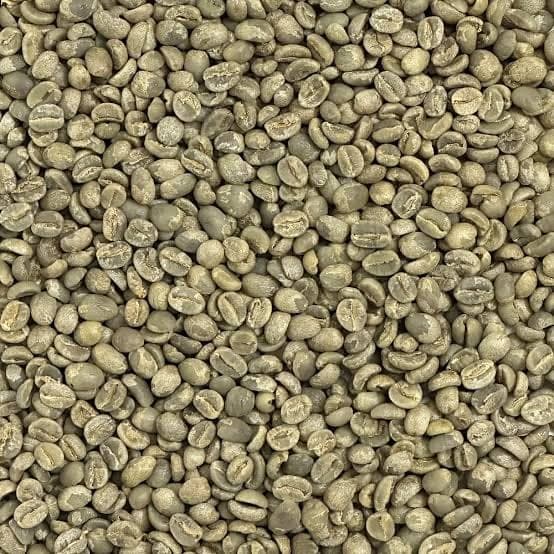
Kenya C is the flat-bean separation smaller than the AB block, retained at approximately screen 14 and below. It is a size class, and it comes from the same cherry and processing as the AA and AB from the same outturn.
Contract on: region · grade · screen · process · crop · moisture · defect tolerance · cup approval.
Request current kenya c gradeWhere C sits
- Basis
- Size — screen separation at the dry mill
- Screen
- Approximately 14 and below
- Position
- Below the AB block; above T (fines and broken)
- Species / process
- Arabica, fully washed with soak
- Traceability
- Factory and outturn, as for the larger grades
C is distinct from TT, which is a density separation from the AA and AB size ranges rather than a size class, and from T, which is the residual broken and fine material. See Kenya coffee grades.
Smaller is not the same as worse
What C grade actually is
C beans come from the same cherry as the AA and AB alongside them, processed identically. They are the smaller end of the size distribution. Some very good coffee ends up in the small screens, particularly from high-altitude factories where the whole distribution runs tight.
What is true is that a smaller bean has a higher surface-area-to-mass ratio and develops faster in the roaster. In a batch of mixed sizes that is a problem; in a separated C parcel it is simply a profile adjustment.
Where C fits commercially
- Price-led blends where Kenyan character is wanted at a workable cost.
- Applications with a short roast where fast development is an advantage rather than a hazard.
- Volume programmes where the differential on AA and AB is prohibitive.
- Testing a factory before committing to its larger separations at a higher price.
Specify carefully at the bottom of the ladder
The lower the grade, the more the defect and preparation terms have to do. State the maximum full defects per 300 g, the primary defect position, and the foreign matter limit explicitly rather than relying on the grade name.
Kenya C enquiries
Tell us the volume and the defect basis you work to. We will confirm what is available from the current crop.
Request Current Crop OfferThe distinction that matters
What this grade does not tell you
A grade is a preparation class. Everything below is a separate contract field, and every one of them moves independently of the grade name.
What it does fix
Kenya C Grade encodes
- Bean size, as the screen the parcel is retained on
- Bean shape, for the PB separation
- Density, for the TT and T separations
- Whether the coffee is washed or Mbuni (dried whole cherry)
Use the grade to define the physical deliverable. Use the approved sample to define the cup. Both belong in the contract.
What it does not
Specify these separately
- Cup qualityTwo lots at the same grade from the same mill can cup several points apart. Only cupping tells you.
- Defect countA separate count on a defined sample, against a weighting table that differs by origin.
- MoistureA range plus the measurement method. Two meters on one parcel routinely disagree.
- Crop yearNothing in a grade name distinguishes current crop from a parcel that has been in store a year.
- DensityBulk density in g/L, which drives charge temperature and roast planning.
- Water activityStorage stability. Related to moisture but not derivable from it.
- TraceabilityCountry, station or day lot are different claims. A grade fixes none of them.
- Processing methodWashed, natural and honey can all carry the same grade at most origins.
Questions
Frequently asked questions
What is Kenya C grade?
Is C grade low quality?
How is C different from TT?
Keep reading
Related to Kenya C Grade
- Kenya Coffee GradesKenya’s grading terminology explained — E, AA, AB, PB, C, TT, T and Mbuni MH/ML — what each separation is, and why bean size does not determine cup quality.
- Bean size, uniformity and roast behaviourCoffee screen size chart with mm conversion, how sizing tolerances work, what screens 15–18 mean in East African grades, and how bean size affects roasting.
- Kenya AB Green CoffeeKenya AB green coffee: the combined A and B block, why it carries most of an outturn, and why it is frequently the best value on a Kenyan offer list.
- Commercial Green CoffeeCommercial green coffee from six East African origins: the volume grades by origin, how programme contracts are written, and how consistency is held across a season.
Request an offer
Tell us the Kenya coffee you need
Region, process, grade, screen, moisture, defect tolerance, crop year, packaging and destination. Send what you know and we will confirm what Kenya realistically supports for the current crop.