Origin & coffee intelligence
Coffee Knowledge
Start here
Start with your question
Six routes into the reference material, named the way a buyer asks rather than the way the site is filed.
I need to understand a coffee grade
Understand coffee gradesI need to understand crop timing
Explore crop and harvest
Recommended starting points
Essential green coffee guides
Six guides selected because a buyer usually needs them before they can write a specification — an editorial judgement, not a popularity ranking.
- Foundation8 min readCoffee Screen SizesA coffee screen number is the diameter of the sizing screen’s perforation in 64ths of an inch. Screen 18 is an 18/64 inch hole, about 7.14 mm. Multiply the screen number by 0.396875 to get millimetres. "Screen 15+" means the parcel is retained on a screen 15 sieve, subject to a contractually agreed percentage allowed to pass.Read guide
- Foundation3 min readGreen Coffee MoistureGreen coffee moisture is the water content of the bean as a percentage of its mass. Most East African export contracts sit in the 10–12% range. The number is only meaningful alongside the measurement method and instrument, because different methods routinely disagree by half a percentage point or more on the same sample.Read guide
- Technical3 min readGreen Coffee DefectsA defect count converts physical faults found in a defined green sample — commonly 300 g — into weighted "full defect" units. Primary defects such as full black or sour beans count heavily; secondary defects such as broken beans or husk require several occurrences to make one full defect. The weighting tables differ by origin, so counts are not directly comparable between countries.Read guide
- Foundation2 min readCoffee Crop YearA crop year is the twelve-month period a harvest is assigned to, and the convention differs by origin: Tanzania is commonly quoted July–June, Uganda, Kenya and Ethiopia October–September, and Rwanda and Burundi April–March. Because the conventions differ, a contract should state the crop year explicitly rather than relying on the phrase "current crop".Read guide
- Foundation3 min readCoffee Trade TermsA green coffee contract fixes six things: the goods, the price basis, the delivery term, the quality basis, the payment terms and the shipment period. Most disputes come from one of those six being left implicit — usually the quality basis or the point at which weight and quality are determined.Read guide
- Foundation3 min readCoffee CuppingCupping is standardised sensory evaluation: coffee is sample-roasted to a defined level, ground at a set particle size, infused with hot water at a fixed ratio, left to steep, and then the crust is broken and the liquor assessed. The standardisation exists so that differences observed on the table are differences in the coffee, not in the method.Read guide
Cluster 1
Coffee grading systems
Grading systems are origin-specific. A designation such as AA, Grade 1 or Screen 18 cannot be read as one universal quality scale.
Pillar guide
Coffee Grades Explained
A coffee grade is a preparation standard, not a quality score. Most East African grades separate coffee by screen, density or defect count; only Ethiopia’s includes a cup evaluation. All six systems, side by side.
- TanzaniaAA · A · AB · BTanzania Coffee Board (TCB): licensing, auctions at zonal centres, and registration of direct export contracts
- UgandaScreen 18 · Screen 17 · Screen 15 · FAQMinistry of Agriculture, Animal Industry and Fisheries (Coffee Department), which took over the functions of the Uganda Coffee Development Authority in January 2025
- KenyaE · AA · AB · PBCoffee Board of Kenya under the Coffee Act 2026, with weekly auctions at the Nairobi Coffee Exchange alongside regulated direct sales
- EthiopiaGrade 1 · Grade 2 · Grade 3 · Grade 4Ethiopian Coffee and Tea Authority (ECTA): inspection, grading, export licensing and contract registration; the Ethiopia Commodity Exchange is one sales channel among several
- RwandaGrade 1 (fully washed) · Grade 2 · Screen 15+ · Screen 16+National Agricultural Export Development Board (NAEB): export licence, quality certificate and certificate of origin
- BurundiGrade A · Grade B · Screen 15+ · Screen 16+ODECA (Office pour le Développement du Café du Burundi), which oversees washing stations and export quality
Cluster 2
Green coffee screen sizes
A screen number is the diameter of the perforation in sixty-fourths of an inch. Everything else follows from that one definition.
Interactive
Screen size explorer
A screen number is the diameter of the sizing perforation in 64ths of an inch. Select one to see what that means in millimetres and in practice.
Perforation diameters, drawn to true relative scale.
7.14mm
- Screen
- 18
- Fraction
- 18/64"
- Calculation
- 18 ÷ 64 in · × 25.4
- Grades
- Kenya AA, Tanzania AA, Uganda Robusta Screen 18, Bugisu AA
The reference large-bean screen across East Africa. Defines AA in Kenya and Tanzania and the largest routinely traded Ugandan Robusta parcel.
Screen 18 in detail →A screen specification is a retention statement, not a guarantee that every bean measures the stated width. Contracts allow a percentage passing the nominated screen, negotiated per parcel — and outside Ethiopia’s classification, screen size does not predict cup quality.
Cluster 3
Coffee processing
The largest lever available at origin, and the one a buyer can specify most directly.
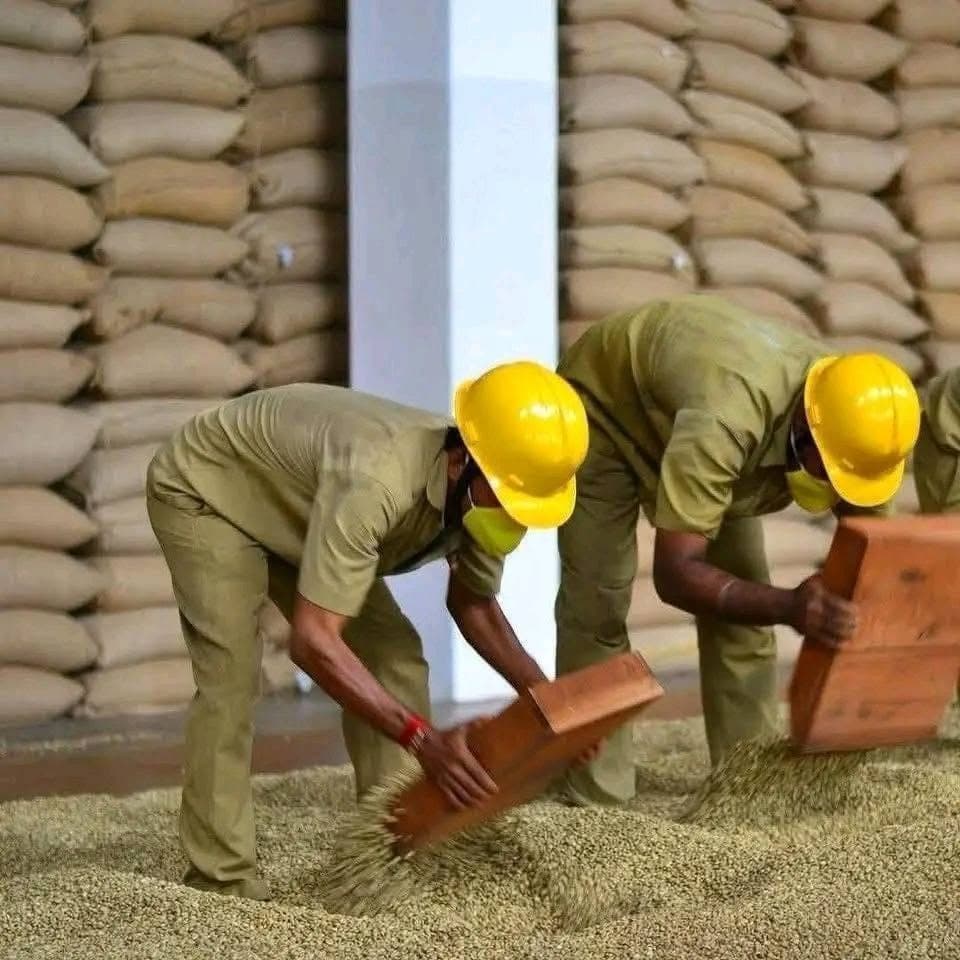
Washed
Fruit removed before drying: cleaner acidity, lighter body, and faults that have nowhere to hide.
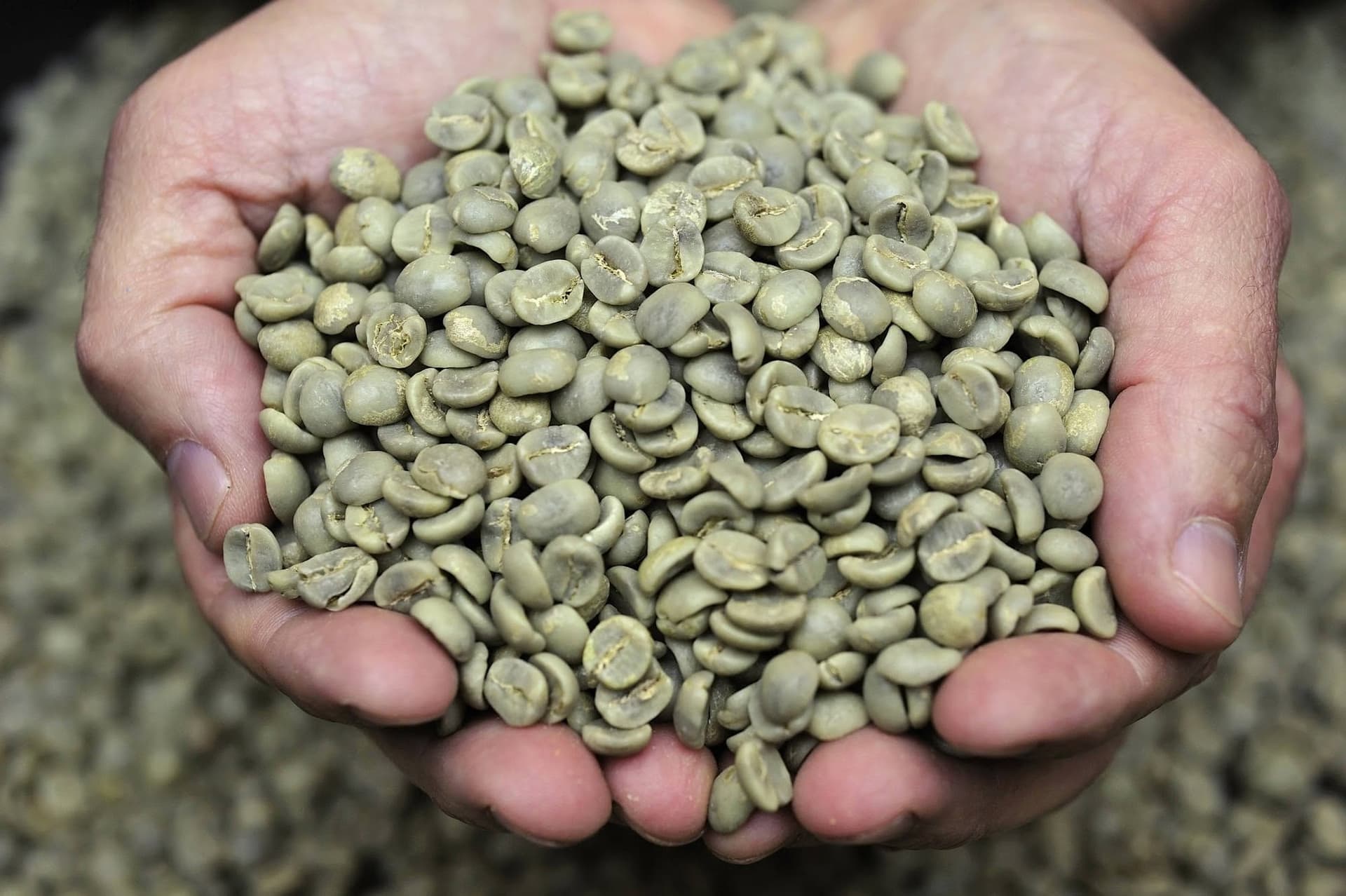
Natural
Dried as whole cherry: heavier body and fruit sweetness, and drying faults invisible in the green.
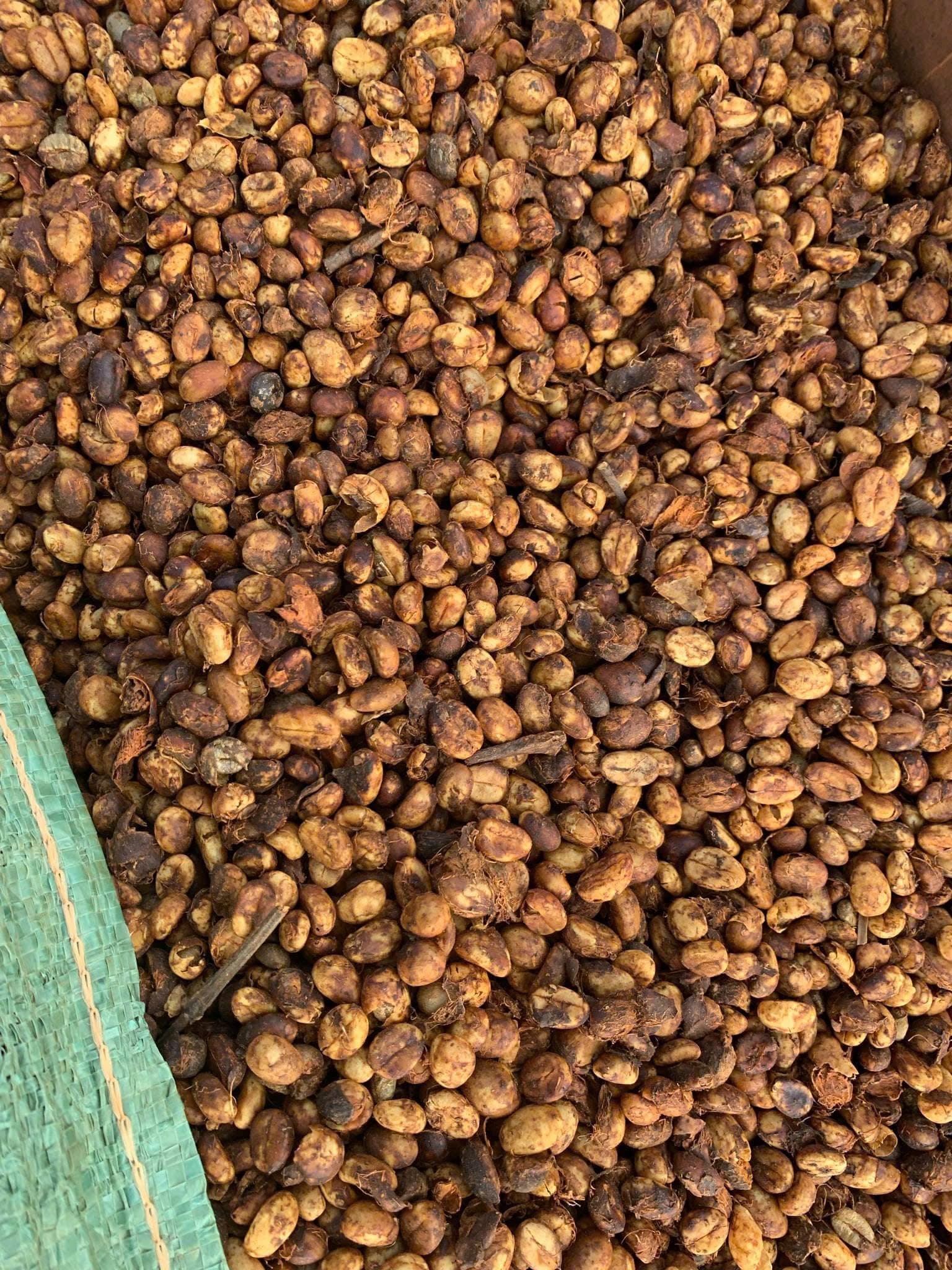
Honey
Pulped but dried with mucilage on: between washed and natural, and small, lot-specific volumes.
- Cherry reception, floatation and sorting
- Pulping — skin and pulp removed
- Fermentation, 12–36 hours
- Washing and channel grading
- Optional clean-water soak
- Drying in parchment to target moisture
- Rest in parchment
- Hulling, screening and sorting
Mill-side detail
Cluster 4
Green coffee quality
Eight fields define a lot. No single one of them describes it, which is the thing most specifications get wrong.
- 01OriginWhere did it grow, and how tightly is that known?
- 02ProcessWhat happened between cherry and green bean?
- 03GradeHow was it separated and prepared?
- 04ScreenWhat size is the bean, and with what tolerance?
- 05DefectsWhat physical faults are present, on what counting basis?
- 06MoistureIs it dried appropriately, measured how?
- 07CropWhich harvest, and how long has it been in store?
- 08CupHow does it actually taste, against an approved sample?
No single field tells a buyer everything about a lot. A specification that names only the grade has fixed the preparation and left everything else to chance.
The distinction
Physical quality is not sensory quality
Collapsing the two is how a premium gets charged for something a screen cannot see.
Measured on the bench
Physical quality
Repeatable, instrument-based, and verifiable by a third party.
Assessed on the table
Sensory quality
Requires a protocol, multiple cups and a retained reference sample.
Together
A buyer lot decision
Physical analysis says what will arrive. Cupping says whether you want it. A parcel approved on one and not the other has not been approved.
Cluster 5
Cupping and sensory
Cupping is standardised so that differences observed on the table are differences in the coffee, not in the method.
- Origin and lot selection
- Pre-shipment sample drawn
- Physical analysis — moisture, water activity, density
- Screen and defect count
- Cupping against the approved sample
- Preparation adjustment if required
- Final pre-shipment sample
- Loading supervision and seal record
- Coffee CuppingHow professional coffee cupping works: sample roasting, grind, ratio, water, the break, and the controls that make one table’s results comparable with another’s.
- Cupping ScoreWhat a coffee cupping score represents, why scores are only comparable within one protocol and a calibrated panel, and how to write one into a contract.
- Specialty Coffee ScoringHow specialty coffee is assessed: descriptive versus affective evaluation, defect thresholds, and what "specialty" actually means commercially.
- Coffee Flavour ProfileHow origin, variety, altitude and processing each contribute to a green coffee’s flavour profile, and how East African origins typically present on the cupping table.
Cluster 6
Crop and trade terms
Crop-year conventions, contract language and the Incoterms actually used in green coffee.
Crop and contract
Where cost and risk transfer
Under all three terms risk passes when the goods are on board at the port of loading. CFR and CIF move the freight cost to the seller — they do not move the risk transfer point.
Cluster 7
Export and logistics
What happens to a parcel after it is approved — packaging, loading, documentation and storage.
- Green coffee packagingFormats, liners, weights and marking
- Coffee bagsJute, sisal and the conventions per origin
- Hermetic barrier linersWhat a barrier liner does, and what it does not
- Container loadingPayload, stow pattern and why there is no universal figure
- Green coffee storageTemperature, humidity and the conditions that preserve condition
- Shipping documentsThe document set and who issues each part
- Quality inspectionSampling method, analysis and pre-shipment approval
- TraceabilityLevels of provenance and what evidences each
Tools
Coffee buyer tools
Interactive utilities that do arithmetic on figures you supply, or draw a specification to scale. Every one of these is built and working — there are no placeholders here.
- Screen size explorerScreens 14–18 drawn to true relative scale, with the millimetre conversion
- Container loading calculatorBag count and payload arithmetic on figures you supply — no assumed maximum
- Bag weight calculatorNet, tare and estimated gross across a parcel
- Packaging selectorNarrows six formats to the two or three worth discussing
- Grade comparison chartAll six grading systems plotted against the screen scale
- Crop calendarFlowering, harvest, milling and export across thirteen regional cycles
Origins
East African origin intelligence
The technical material above applies differently at each origin. These are the six, compared.
| Origin | Species | Main preparation | Representative grades | Harvest | Ports |
|---|---|---|---|---|---|
| Tanzania | Arabica · Robusta | Fully washed · Natural | AA · A · AB · B | June–October in the south; July–December in the north | Dar es Salaam · Tanga |
| Uganda | Robusta · Arabica | Natural (Robusta) · Washed Arabica (WUGAR) | Screen 18 · Screen 17 · Screen 15 · FAQ | Robusta main crop November–February with a fly crop April–July; Elgon Arabica October–February | Mombasa (Northern Corridor) · Dar es Salaam (Central Corridor) |
| Kenya | Arabica | Fully washed with soak · Mbuni (natural) | E · AA · AB · PB | Main crop October–December; early (fly) crop May–July | Mombasa |
| Ethiopia | Arabica | Fully washed · Natural (sun-dried) | Grade 1 · Grade 2 · Grade 3 · Grade 4 | October–January, varying by region and altitude | Djibouti (primary transit port) |
| Rwanda | Arabica | Fully washed · Natural (growing) | Grade 1 (fully washed) · Grade 2 · Screen 15+ · Screen 16+ | March–July, with the peak in April and May | Mombasa (Northern Corridor) · Dar es Salaam (Central Corridor) |
| Burundi | Arabica | Fully washed with soak · Natural (limited) | Grade A · Grade B · Screen 15+ · Screen 16+ | March–July | Dar es Salaam (Central Corridor) · Mombasa (Northern Corridor) |
Reference
Coffee glossary
The working vocabulary used in green coffee contracts, quality evaluation, processing and export — outturn, screen, parchment, crop year, tare, differential — written as a buyer needs them rather than as dictionary entries.
Working on a specification?
Send the origin, grade, screen, process, crop and volume you are working to — or describe the role the coffee plays and we will propose a specification against it. Request a current crop offer, or see current availability.