Company
Sustainability
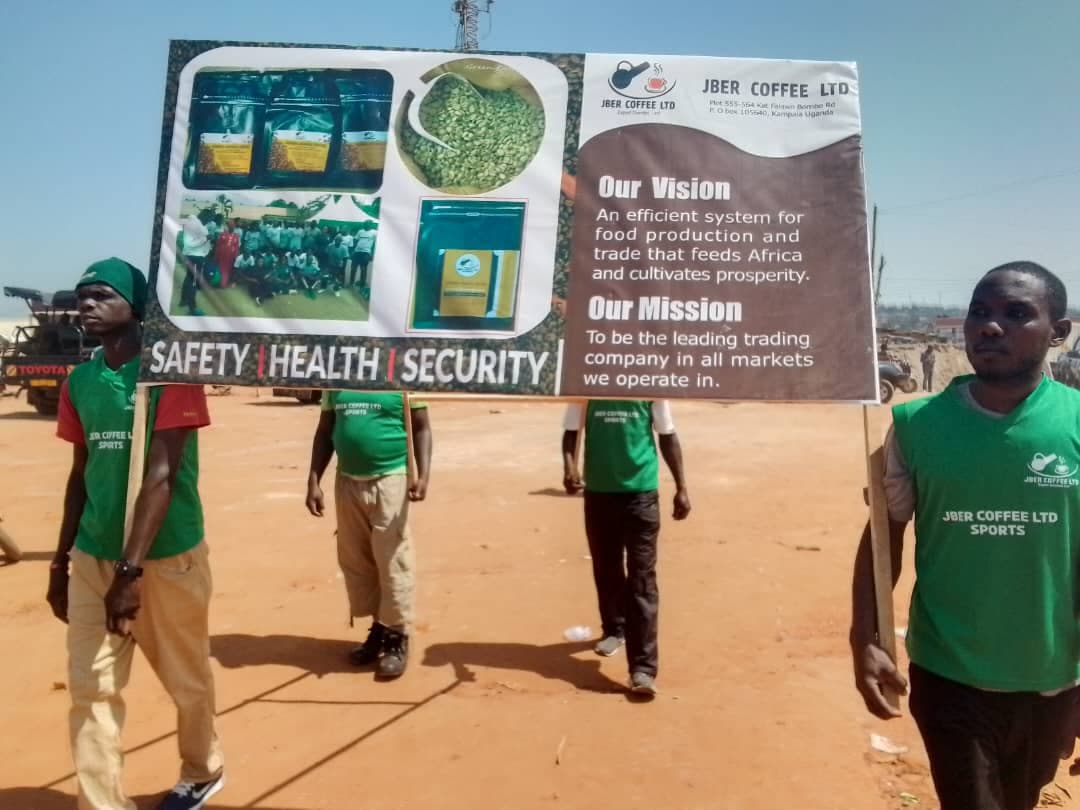
Coffee powered by community
Our sustainability work concentrates on two groups who do a great deal of the labour in East African coffee and hold comparatively little of its value: women and young people. We would rather run two programmes properly than list eight.
The commercial logic is not hidden. A supply base where women can access finance and young people can see a future holds together across bad years. One where neither is true erodes, and the erosion shows up first as declining quality and then as declining volume.
Women in the coffee value chain
Women do a large share of the work in coffee farming and hold a much smaller share of the land titles, the cooperative memberships and the payments. Our programmes target the three barriers that follow from that.
Training
Practical instruction in sustainable farming practice and in the specific handling decisions — picking selectivity, drying discipline — that move a lot up a grade.
Access to finance
Connecting women farmers with microfinance so that a harvest can be held for a better price rather than sold immediately to cover a cash need.
Leadership
Encouraging women into decision-making roles in cooperatives and community structures, which is where the durable change is, because it outlasts any single programme.
Young people entering the trade
The average coffee farmer in East Africa is ageing, and the succession problem is a supply problem before it is a social one. Making the work worth entering is a commercial interest as much as a moral one.
Skills
Programmes covering modern cultivation, processing and the business side of running a coffee enterprise rather than only the agronomy.
Entrepreneurship
Support and mentorship for young people building their own operations in the value chain, not only for those seeking employment within it.
Employment
Prioritising young people in hiring across our operations and supply chain activity.
Straight answers
What we claim, and what we decline to claim
The section a procurement team should read first, because it is the one that tells them how much weight to put on everything else.
Certification marks
We display none. Using a scheme’s mark requires a licence from that scheme, and a supplier displaying one it does not hold is a due diligence problem for the buyer, not a decoration. Where a lot is certified, the certificate travels with the lot and the scheme is named in the contract.
EUDR compliance
We do not describe coffee as “EUDR compliant”, because compliance is a property of an operator’s due diligence statement rather than of a lot or a supplier. What we can do is state exactly what supply chain and geolocation data exists for a given supply base, collected when and by whom — including where coverage is partial.
Carbon and deforestation figures
We publish none, because we have not measured them. A figure invented for a website is worse than an absent one: it will be quoted back to us in a questionnaire we then cannot answer.
Impact measurements
The programmes above are real and running. We do not attach participant counts or outcome percentages to them, because those numbers have not been independently collected. If a buyer needs verified impact data for a reporting obligation, tell us at enquiry stage and we will say what can be assembled and what cannot.
Sustainability language is cheap and a buyer knows it. The parts of this page worth anything are the ones you can check: the programmes are describable, the facility can be visited, the traceability data can be requested and inspected, and where the data does not exist we will tell you so before you contract rather than after.
Environmental practice at the facility
Dry milling generates husk, chaff and light-density by-product in quantity. None of it is waste: husk and chaff have established local uses as fuel and as soil input, and the lower-grade coffee fractions removed by screening and colour sorting are sold into the markets that use them rather than discarded — or, worse, blended back into a contracted lot to make up weight.
Storage practice matters environmentally as well as commercially. Coffee stacked on dunnage in a ventilated store holds condition without chemical intervention, which is the cheapest and cleanest way to protect a crop that has already had a great deal of land, labour and water invested in it.
How the facility runsTell us your reporting requirement
If a due diligence statement, a certification scheme or a customer questionnaire drives your specification, say so at enquiry stage. We will tell you what data exists for the origins you want before you commit to a contract.
Keep reading
Related
- EUDR and CoffeeThe EU Deforestation Regulation for coffee as amended — dates, who files, geolocation — and the origin data we supply.
- TraceabilityWhat each level of coffee traceability means and what evidence supports it.
- Coffee CertificationsOrganic, Fairtrade, Rainforest Alliance and 4C — how each scheme works.
- Our PeopleTraining, mentorship and staff engagement — and where each part of it touches the coffee that arrives.
- Processing FacilityOur dry milling and export operation — hulling, cleaning, grading, colour sorting, bagging and supervised loading.
- CompanyWho we are, how we source, and how quality is controlled before a container is sealed.