Kenya · Grade
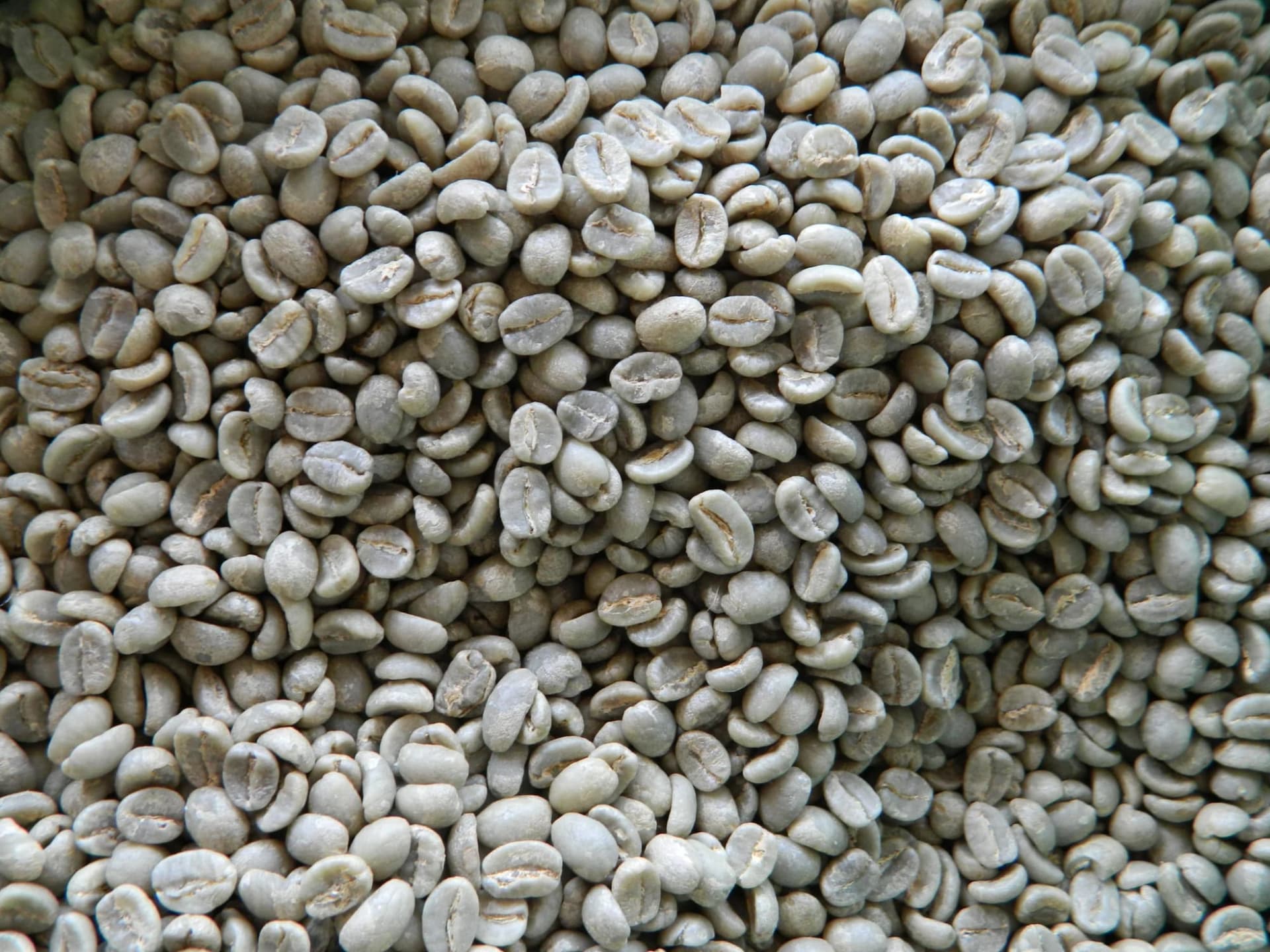
Kenya AA Green Coffee
- Species
- Arabica
- Preparation
- Fully washed with soak · Mbuni (natural)
- Harvest
- Main crop October–December; early (fly) crop May–July
Quick answer
Kenya AA is the flat-bean separation retained on approximately screen 17/18 from a Kenyan Arabica outturn. It is produced mechanically at the dry mill and specifies bean size and preparation — not cup quality. An AB from a strong factory routinely outperforms an AA from a weaker one.
Contract on: region · grade · screen · process · crop · moisture · defect tolerance · cup approval.
Request current kenya aa green coffeeWhat AA specifies
- Basis
- Size — screen separation at the dry mill
- Screen
- 17/18, approximately 6.8–7.2 mm
- Species / process
- Arabica, fully washed with soak
- Position
- Below E (elephant), above AB in the size ladder
- Traceability
- Factory name and outturn number
The full ladder — E, AA, AB, PB, C, TT, T and Mbuni MH/ML — is set out on the Kenya coffee grades page.
Why the grade does not tell you about the cup
AA and AB are the same coffee at different widths
Both come from the same cherry, picked on the same day, fermented in the same tank, soaked in the same water and dried on the same beds. The only difference is which screen retained them. Every variable that determines cup quality is identical between them.
There is a real reason to prefer AA, and it is a roasting reason: larger, more uniform beans absorb heat predictably, which matters on a tight profile. That is worth paying for when it applies. What is not supported is the assumption that AA is the better coffee.
The practical test costs nothing: cup the AA and the AB from the same factory side by side before deciding which to buy.
The factory is the variable that matters
A Kenyan lot is identified by factory and outturn number. That is the level at which the cherry selection, the fermentation and the drying were actually managed — and therefore the level at which quality was determined. Two AAs from different factories are two different coffees; two grades from the same factory are two widths of one.
Specifying Kenya AA
- Factory
- Named, with the outturn number recorded
- Region
- Nyeri, Kirinyaga, Murang’a, Embu, Meru, Kiambu or western
- Screen
- Retained on 17, maximum X% passing
- Defects
- Maximum full defects per 300 g; zero primary defects
- Moisture
- Range plus method
- Water activity
- Where storage duration matters
- Crop
- Crop year and whether main or fly crop
- Cup
- Approved sample plus a fault-tolerance clause
- Packaging
- 60 kg jute with hermetic liner
Kenya AA enquiries
Tell us the region and profile. We will send AA and AB from the same factory so you can compare before committing.
Request Current Crop OfferThe distinction that matters
What this grade does not tell you
A grade is a preparation class. Everything below is a separate contract field, and every one of them moves independently of the grade name.
What it does fix
Kenya AA Green Coffee encodes
- Bean size, as the screen the parcel is retained on
- Bean shape, for the PB separation
- Density, for the TT and T separations
- Whether the coffee is washed or Mbuni (dried whole cherry)
Use the grade to define the physical deliverable. Use the approved sample to define the cup. Both belong in the contract.
What it does not
Specify these separately
- Cup qualityTwo lots at the same grade from the same mill can cup several points apart. Only cupping tells you.
- Defect countA separate count on a defined sample, against a weighting table that differs by origin.
- MoistureA range plus the measurement method. Two meters on one parcel routinely disagree.
- Crop yearNothing in a grade name distinguishes current crop from a parcel that has been in store a year.
- DensityBulk density in g/L, which drives charge temperature and roast planning.
- Water activityStorage stability. Related to moisture but not derivable from it.
- TraceabilityCountry, station or day lot are different claims. A grade fixes none of them.
- Processing methodWashed, natural and honey can all carry the same grade at most origins.
Questions
Frequently asked questions
What is Kenya AA coffee?
Is Kenya AA the highest quality Kenyan coffee?
Why is Kenya AA more expensive than AB?
Should I specify a factory as well as a grade?
Keep reading
Related to Kenya AA Green Coffee
- Kenya Coffee GradesKenya’s grading terminology explained — E, AA, AB, PB, C, TT, T and Mbuni MH/ML — what each separation is, and why bean size does not determine cup quality.
- Screen 18 — size, grades and contract termsCoffee screen size chart with mm conversion, how sizing tolerances work, what screens 15–18 mean in East African grades, and how bean size affects roasting.
- Bean size, uniformity and roast behaviourCoffee screen size chart with mm conversion, how sizing tolerances work, what screens 15–18 mean in East African grades, and how bean size affects roasting.
- Kenya AB Green CoffeeKenya AB green coffee: the combined A and B block, why it carries most of an outturn, and why it is frequently the best value on a Kenyan offer list.
- Kenya ArabicaKenyan Arabica: SL28, SL34, Ruiru 11 and Batian, the cooperative factory system, soak processing, growing regions and harvest timing.
- Kenya Green CoffeeKenyan green coffee: the factory and outturn system, the AA/AB/PB grade ladder, soak processing, growing regions and how to buy Kenyan coffee well.
Request an offer
Tell us the Kenya coffee you need
Region, process, grade, screen, moisture, defect tolerance, crop year, packaging and destination. Send what you know and we will confirm what Kenya realistically supports for the current crop.