Uganda · Species
Uganda Robusta
- Species
- Robusta
- Preparation
- Natural (Robusta) · Washed Arabica (WUGAR)
- Harvest
- Robusta main crop November–February with a fly crop April–July; Elgon Arabica October–February
Quick answer
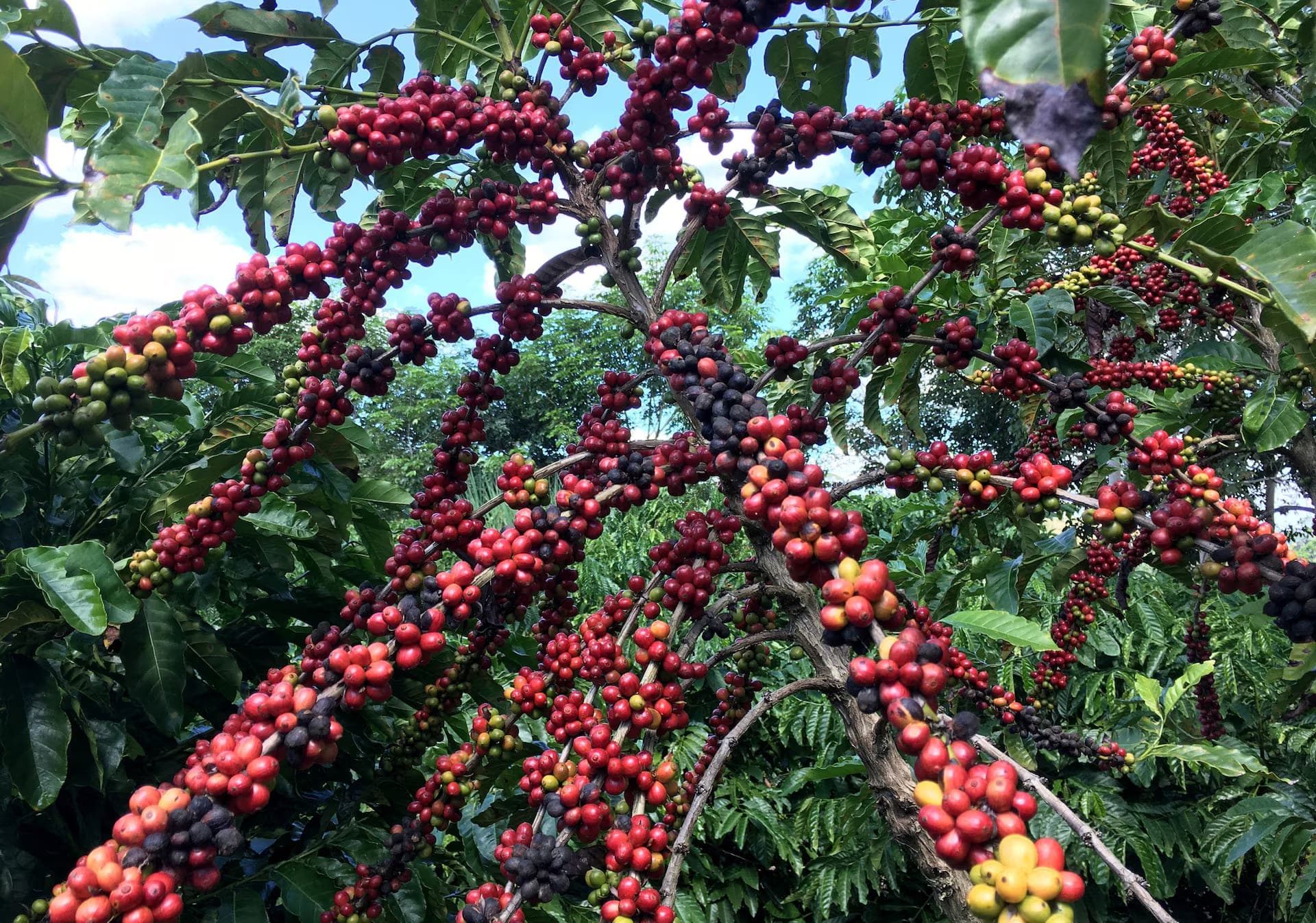
Ugandan Robusta is dry-processed coffee from the Lake Victoria basin, graded purely by screen — 18, 17, 15, 14 and 12 — plus unsized FAQ parcels. Two harvest cycles keep it available for most of the year, which is why it anchors so many commercial blends and soluble programmes.
Contract on: region · grade · screen · process · crop · moisture · defect tolerance · cup approval.
Request current uganda robustaThe growing areas
- Masaka and the greater lake shore — the core belt, 1,100–1,400 m, supplying most screen-graded export volume.
- Central Uganda and Luwero — significant production feeding the same channels.
- Western lakeshore areas — where the fly crop is most pronounced.
- Remnant forest populations — wild and semi-wild *Coffea canephora* persists in the region, a reminder of where the species comes from.
Two cycles
| Cycle | Flowering | Harvest | Export window |
|---|---|---|---|
| Main crop | February–April | November–February | December–June |
| Fly crop | August–October | April–July | May–October |
The practical consequence is continuity of supply. A commercial blend that depends on Ugandan Robusta is rarely forced to bridge a gap, which is worth a good deal in a programme.
Screen grades
| Grade | Screen | mm | Where it fits |
|---|---|---|---|
| Screen 18 | 18/64" | 7.14 | Premium size class; bean uniformity for the roast or a visual match |
| Screen 17 | 17/64" | 6.75 | Intermediate; useful when 18 is scarce |
| Screen 15 | 15/64" | 5.95 | The volume workhorse |
| Screen 14 | 14/64" | 5.56 | Price-led blending and extraction |
| Screen 12 | 12/64" | 4.76 | Smallest commercial size; mostly soluble |
| FAQ | Unsized | — | Sold on defect and moisture terms; specify everything explicitly |
Contracting
The screen constrains size and nothing else
A screen specification says nothing about defects, moisture or foreign matter. Ugandan Robusta contracts live or die on those three clauses, and FAQ parcels need them most of all because there is no screen at work either.
- Screen
- Retention screen plus permitted percentage passing
- Defects
- Maximum total, with black and broken capped separately
- Moisture
- Ceiling plus method — commonly around 12–13%
- Foreign matter
- Maximum, stones counted separately
- Crop year and cycle
- Explicit — main crop or fly crop
- Packaging
- 60 kg jute, or bulk liner for volume
- Certification
- 4C is common on commercial Robusta
- Routing
- Mombasa or Dar es Salaam — affects transit and documentation
What good Robusta tastes like
Robusta’s reputation is largely a processing artefact. The species carries more chlorogenic acid and caffeine than Arabica, which contributes bitterness and body — but a carefully picked, properly dried, well-sorted Robusta is clean, sweet and heavy-bodied, without the rubber and burnt character associated with careless preparation.
The buying implication: Robusta rewards supplier selection and specification discipline more than most Arabica, because the range between careless and careful is so wide.
Robusta programme enquiries
Tell us the annual volume, screen and shipment pattern. Robusta is normally contracted as a programme.
Request Current Crop OfferGrowing regions
Uganda growing regions
Altitude and harvest timing are the two variables a sourcing decision turns on. Where two regions overlap they compete for the same milling and shipping slot; where they do not, a programme can be scheduled across them.
- Masaka & Greater Lake Victoria1,100–1,400 m
- Masaka & Greater Lake Victoria
- Altitude
- 1,100–1,400 m
- Harvest
- November–February with a fly crop April–July
- Processing
- Natural
- Species
- Robusta
Questions
Frequently asked questions
Why is Uganda a major Robusta origin?
What screen should I buy for a commercial blend?
Is Ugandan Robusta available all year?
What moisture should Ugandan Robusta be contracted at?
Keep reading
Related to Uganda Robusta
- Uganda Coffee GradesUgandan Robusta screen grades (18, 17, 15, 14, 12 and FAQ) and the Arabica designations Bugisu AA, DRUGAR and WUGAR — what each term specifies and how to contract against it.
- Coffee Screen SizesCoffee screen size chart with mm conversion, how sizing tolerances work, what screens 15–18 mean in East African grades, and how bean size affects roasting.
- Uganda harvest and export calendarHarvest and export windows for six East African origins, with every regional cycle.
- Dry ProcessingThe mill-side view of dry processing: cherry reception, bed loading, turning regimes, the drying curve and hulling — and the faults that produce phenolic cups.
- Robusta Green CoffeeUgandan and Tanzanian Robusta green coffee, screen-graded and contracted on defect and moisture terms — for blends, espresso bases and soluble production.
- Commercial Green CoffeeCommercial green coffee from six East African origins: the volume grades by origin, how programme contracts are written, and how consistency is held across a season.
- Bulk and Wholesale Green CoffeeBulk and wholesale green coffee from East Africa: container programmes, bagged or bulk-lined, the range distributors need and how consistency is held across shipments.
Request an offer
Tell us the Uganda coffee you need
Region, process, grade, screen, moisture, defect tolerance, crop year, packaging and destination. Send what you know and we will confirm what Uganda realistically supports for the current crop.