Traceability
Coffee Traceability
Read this first
Nothing on this page claims a traceability level for any particular coffee. It describes what the levels mean and what evidences them. The level available for a given lot is confirmed against that lot’s documentation at the time of offer — and where a parcel is a pooled commercial lot, we say so rather than describing it in terms that imply more.
The chain
Where a coffee comes from, step by step
Each link in this chain is a point at which identity can either be preserved or lost. Traceability depth is simply how far back along it the records reach.
- Step 1
Farm / plot
Producer identity, plot geolocation
- Step 2
Wet mill / station
Delivery record, day lot
- Step 3
Dry mill
Outturn or milling batch number
- Step 4
Warehouse
Lot identity, storage conditions
- Step 5
Container
Bag count, seal number, stuffing record
Levels
Six levels, and what evidences each
The useful question is never whether a coffee is traceable. It is which level is claimed, and what document backs it.
| Level | Unit | Typically evidenced by | Availability |
|---|---|---|---|
| Country | Nation of origin | Certificate of Origin, ICO marks on the shipping documents | Always |
| Region / zone | A named growing area | Mill and exporter records; auction or exchange lot identification | Routine |
| Cooperative / union | A member organisation | Delivery records, cooperative membership lists, certification chain-of-custody records where applicable | Common |
| Washing station / factory / AMCOS | A single processing site | Station cherry-reception records; parchment delivery notes to the dry mill | Common for specialty |
| Delivery period / day lot | One site, one narrow window | Dated station reception and drying records kept separate through the mill | Selective |
| Producer / farm | A named grower | Individual delivery records; farm registration and, for EUDR, plot geolocation | Limited |
Always
Country
The baseline for every lot. Present on all export documentation as a matter of course.
Routine
Region / zone
Reliable for most origins. Note that Ethiopian regional names such as Yirgacheffe function as quality designations as well as geography.
Common
Cooperative / union
The practical unit across much of the region, because production is overwhelmingly smallholder.
Common for specialty
Washing station / factory / AMCOS
The most useful level for most specialty buying. It identifies who processed the coffee, which is where most of the quality variance sits.
Selective
Delivery period / day lot
Requires the station to keep separations physically apart from reception through drying, hulling and bagging. Not every station is equipped or staffed to do it.
Limited
Producer / farm
Realistic for estates and for smallholder lots kept separate deliberately. Not realistic for a pooled cooperative parcel, and claiming it for one would be false.
Why it breaks
Where identity is lost
- At cherry reception. If deliveries from many growers go into one tank, individual identity ends there — and for most East African smallholder production, that is exactly what happens.
- On the drying beds. Keeping day lots separate means physically separate beds, labelled and tracked. Combining them is cheaper and it is where a day-lot claim quietly becomes a station claim.
- At the dry mill. Hulling and grading lines have to be purged between lots for a separation to survive. Small parcels are the most vulnerable, because purging costs the same regardless of lot size.
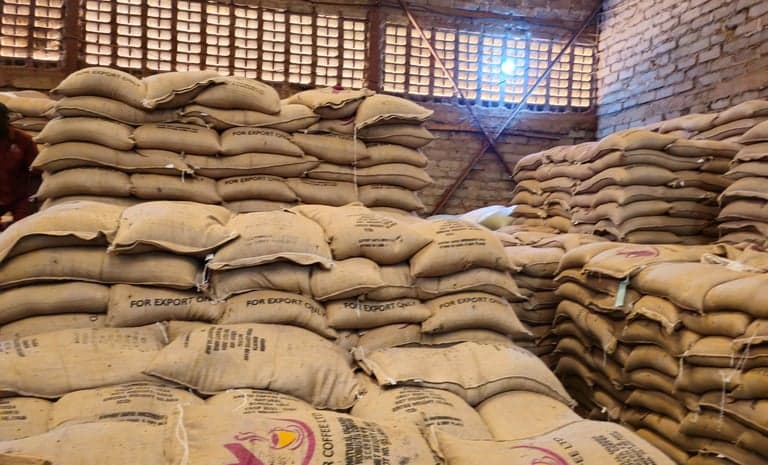
- In bulking for export. Combining outturns to fill a container is normal commercial practice and it merges identities. If a separation matters, it has to be specified before bulking, not discovered after.
Asking well
Questions that get real answers
- 1. Which level is this — country, region, cooperative, station, delivery period or producer?
- 2. What document evidences it, and can I see a redacted example before I contract?
- 3. Was this lot bulked with any other, and if so at which stage?
- 4. If I buy this again next crop, what stays the same — the station, the region, or only the country?
- 5. For EU shipments: what geolocation data exists, and at what granularity?
By origin
What each origin gives you natively
The standard unit of identity differs by origin, because it follows how each country’s coffee is delivered and milled.
| Origin | Standard unit | Why |
|---|---|---|
| Kenya | Factory + outturn number | The cooperative factory system and dry-mill outturn numbering make this the default rather than an upgrade |
| Rwanda | Coffee washing station | Dense station network with small catchments |
| Burundi | Washing station + colline | Stations record cherry deliveries by hill |
| Ethiopia | Washing station + woreda | Stations aggregate from surrounding kebeles |
| Tanzania | AMCOS / central pulpery | Primary cooperative societies are the delivery unit |
| Uganda | Washing station (Arabica); collection area (Robusta) | Robusta’s dispersed dry processing makes station-level identity harder |
The records that support each level
Chain of custody records
- Cherry delivery record
- Producer or group, date, weight, station
- Processing record
- Tank, fermentation and washing detail, bed allocation
- Drying record
- Bed identity, start and finish dates, final moisture
- Parchment transfer
- Weight and identity moving from station to dry mill
- Milling record
- Outturn or batch number, grade separations produced, outturn yield
- Warehouse record
- Lot identity, bag count, storage location and conditions
- Stuffing record
- Bag count, container and seal number, loading photographs
For coffee going to the EU, these records are what plot geolocation has to be linked to. The regulation does not accept mass balance, so a consignment has to be traceable to the plots that actually supplied it — see EUDR and coffee.
Questions