Uganda · Grade
Uganda Robusta Screen 15
- Species
- Robusta · Arabica
- Preparation
- Natural (Robusta) · Washed Arabica (WUGAR)
- Harvest
- Robusta main crop November–February with a fly crop April–July; Elgon Arabica October–February
Quick answer
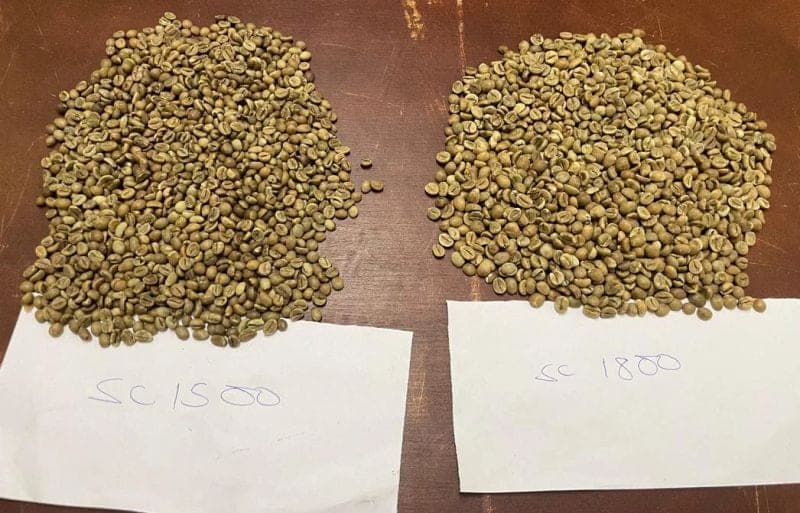
Uganda Robusta Screen 15 is natural Robusta retained on a 15/64 inch screen — approximately 5.95 mm. It is the most widely traded East African Robusta specification, balancing availability against price, and is the standard input for commercial blends and soluble production.
Contract on: region · grade · screen · process · crop · moisture · defect tolerance · cup approval.
Request current uganda robusta screen 15Why screen 15 carries the volume
Screen 15 sits at the point where the size distribution is thickest. There is enough of it in any normal crop to support continuous multi-container supply, and it avoids the scarcity differential that screen 18 carries.
- Widely used in commercial roast-and-ground blends where Robusta contributes body and crema.
- The default input for much soluble production, where bean size matters less than yield and consistency.
- Supported by Uganda’s two harvest cycles, so it is rarely out of the market.
- Available in both bagged and bulk-lined presentations for volume programmes.
Contracting a programme
Screen 15 is normally bought as a programme across a season rather than as a single shipment. That changes what the contract needs.
- Volume
- Total across the season and the split by shipment
- Shipment pattern
- Fixed schedule or call-off with a stated notice period
- Price basis
- Differential to the London Robusta reference, with nominated months and a fixation window
- Governing sample
- One sample governs all shipments; each is verified against it
- Screen
- Retained on 15, maximum X% passing
- Defects
- Maximum total, black and broken capped separately
- Moisture
- Ceiling plus method — commonly around 12–13%
- Foreign matter
- Maximum, stones counted separately
- Crop transition
- How the main crop / fly crop changeover is handled
- Certification
- 4C where required
Presentation
| 60 kg jute | Bulk container liner | |
|---|---|---|
| Coffee per container | Slightly less — bag tare | Slightly more |
| Lot separation | Full | None within the container |
| Discharge | Manual or mechanical | Tipping or vacuum |
| Packaging cost | Higher | Lower |
Screen 15 programme enquiries
Tell us the annual volume, presentation and shipment pattern. We will quote on a programme basis.
Request Current Crop OfferThe distinction that matters
What this grade does not tell you
A grade is a preparation class. Everything below is a separate contract field, and every one of them moves independently of the grade name.
What it does fix
Uganda Robusta Screen 15 encodes
- Bean size, as the screen the Robusta parcel is retained on
- Preparation method, through the WUGAR and DRUGAR designations
- For Bugisu, the size separation within a washed Elgon preparation
- For FAQ, that the parcel is unsized and sold on a stated defect basis
Use the grade to define the physical deliverable. Use the approved sample to define the cup. Both belong in the contract.
What it does not
Specify these separately
- Cup qualityTwo lots at the same grade from the same mill can cup several points apart. Only cupping tells you.
- Defect countA separate count on a defined sample, against a weighting table that differs by origin.
- MoistureA range plus the measurement method. Two meters on one parcel routinely disagree.
- Crop yearNothing in a grade name distinguishes current crop from a parcel that has been in store a year.
- DensityBulk density in g/L, which drives charge temperature and roast planning.
- Water activityStorage stability. Related to moisture but not derivable from it.
- TraceabilityCountry, station or day lot are different claims. A grade fixes none of them.
- Processing methodWashed, natural and honey can all carry the same grade at most origins.
Questions
Frequently asked questions
How many millimetres is screen 15?
Why is screen 15 the most traded Ugandan Robusta grade?
Can screen 15 be shipped in bulk?
How is a season-long Robusta programme priced?
Keep reading
Related to Uganda Robusta Screen 15
- Screen 15 — size, grades and contract termsCoffee screen size chart with mm conversion, how sizing tolerances work, what screens 15–18 mean in East African grades, and how bean size affects roasting.
- Coffee Trade TermsThe working vocabulary of green coffee trading: differentials, the C price, contract types, quality clauses, weight terms, payment and what each one commits you to.
- Uganda Coffee GradesUgandan Robusta screen grades (18, 17, 15, 14, 12 and FAQ) and the Arabica designations Bugisu AA, DRUGAR and WUGAR — what each term specifies and how to contract against it.
- Uganda Robusta Screen 18Ugandan Robusta screen 18: what the size class delivers, what it costs in outturn, when it is worth specifying, and how to write the contract.
- Commercial Green CoffeeCommercial green coffee from six East African origins: the volume grades by origin, how programme contracts are written, and how consistency is held across a season.
- Bulk and Wholesale Green CoffeeBulk and wholesale green coffee from East Africa: container programmes, bagged or bulk-lined, the range distributors need and how consistency is held across shipments.
Request an offer
Tell us the Uganda coffee you need
Region, process, grade, screen, moisture, defect tolerance, crop year, packaging and destination. Send what you know and we will confirm what Uganda realistically supports for the current crop.