Quality
Quality Assurance
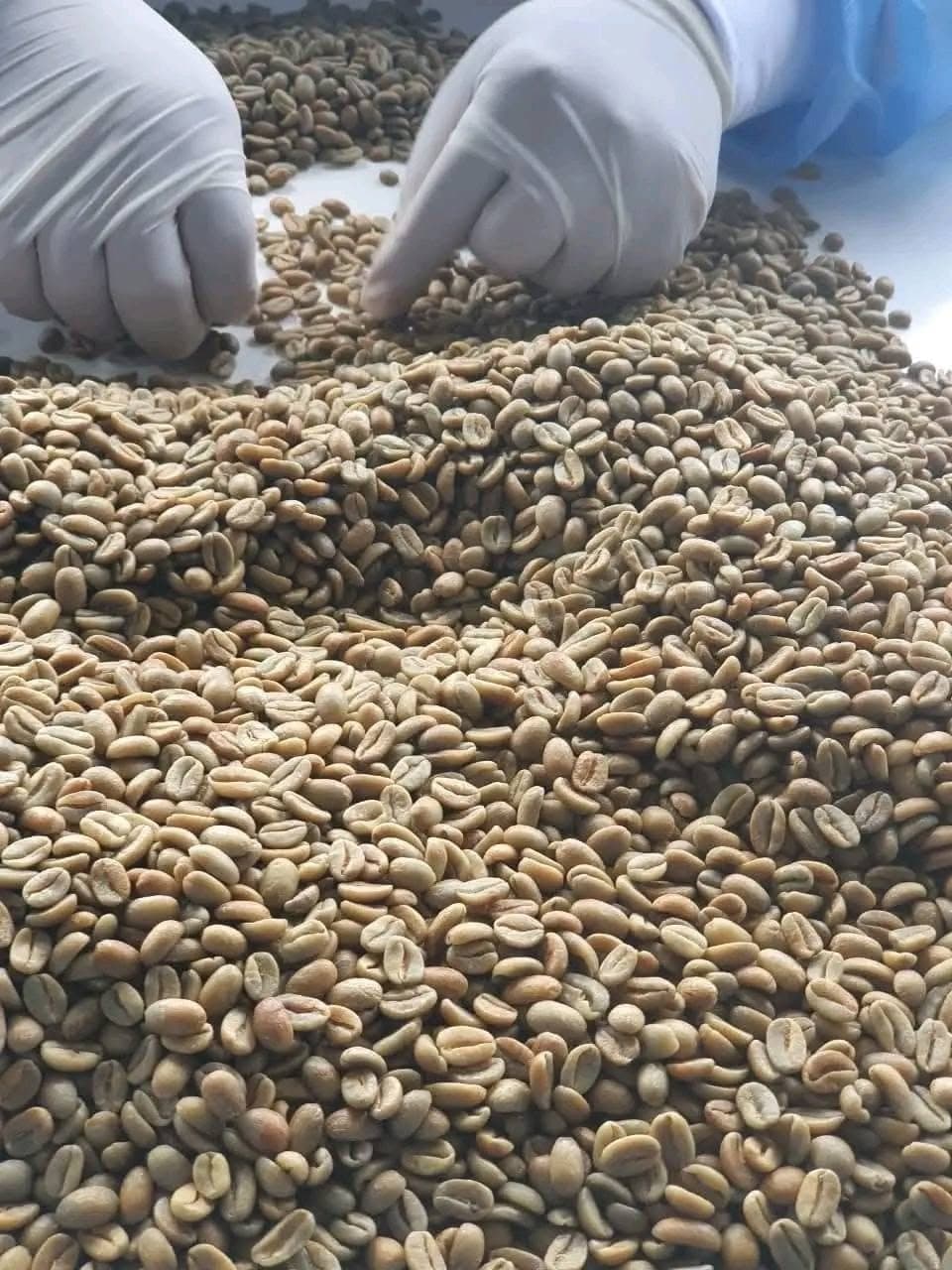
- Origin and lot selection
- Pre-shipment sample drawn
- Physical analysis — moisture, water activity, density
- Screen and defect count
- Cupping against the approved sample
- Preparation adjustment if required
- Final pre-shipment sample
- Loading supervision and seal record
Workflow
What happens at each step
Written as an operational description rather than as a promise. Where a step depends on the station rather than on us, it says so.
- 01
Sourcing
Identifying stations, factories and mills that can meet the specification, and confirming the crop actually supports it before anything is offered. This is where a requirement that cannot be filled should be identified — not at shipment.
- 02
Cherry and lot selection
At station level: floatation and hand sorting at reception, and the delivery-day separation that makes tighter lots possible. Everything downstream is limited by what is accepted here, because no later step removes an under-ripe cherry.
- 03
Processing
Pulping clearance, fermentation endpoint judged by feel rather than by clock, washing and channel grading, and the clean-water soak where the origin uses one. Failure modes here are sour, phenolic and dull cups.
- 04
Drying
Layer depth, turning frequency, shade management and the discipline of the final days — where over-drying happens because the coffee looks finished before it is. Dried to target moisture, then rested before hulling.
- 05
Hulling
Parchment removed from washed coffee, or skin, pulp and parchment together from naturals. Equipment settings matter: over-aggressive hulling chips the bean, which is both a defect class and an entry route for moisture in storage.
- 06
Grading
Pre-cleaning, screen separation by bean width, density separation on the gravity table, and colour sorting. This is where the contracted grade and screen are actually produced.
- 07
Defect analysis
A drawn sample picked over by hand, faults categorised and converted to full defect equivalents against the stated weighting table. Reported with the counting basis so it is comparable with the buyer’s own analysis.
- 08
Moisture and water activity
Measured on the same sample draw, with the method and instrument stated. Water activity is reported alongside moisture where storage duration matters — normal moisture with elevated water activity points at uneven drying.
- 09
Cupping
Multiple cups per sample, blind where practical, against the approved reference. Multiple cups is not optional: bean-level faults such as potato taste or a single phenolic bean will not appear in one cup.
- 10
Pre-shipment inspection
A sample drawn from the milled parcel to the agreed sampling method, analysed and cupped against the approved sample. Independent survey arranged where the contract or the payment terms require it.
- 11
Loading
Container inspected before stuffing — dry, clean, odour-free, no light through the seams. Lined and desiccated for the voyage, stuffed under supervision, with bag count, weights, seal number and photographs recorded.
Reporting
What a pre-shipment report contains
Every figure is reported with the method behind it. A number without a method is not comparable with your own measurement, which is where most arrival disputes begin.
| Measurement | What is reported | Why the method matters |
|---|---|---|
| Moisture | Percentage plus instrument and method | Capacitance, resistance and oven methods disagree by enough to argue about — see green coffee moisture |
| Water activity | aw plus measurement temperature | aw is temperature dependent; the reading is meaningless without it |
| Screen analysis | Percentage retained per screen, and the sample size | Screening is statistical, not absolute — see coffee screen sizes |
| Defect count | Full defects per defined sample, plus the weighting table used | Counts from different systems are not directly comparable |
| Density | Bulk density in g/L, plus the fill procedure | Fill method changes the reading substantially |
| Cup | Notes per cup, faults noted separately, protocol named where scored | A score without a protocol and a calibrated panel carries little information |
| Loading record | Bag count, weights, seal number, photographs | The evidence base for any arrival claim |
Sampling is the whole game
Every figure a report contains describes the sample, not the parcel. If the sample was drawn badly, the analysis is precise about the wrong thing. The sampling method — proportion of bags, draws per bag, compositing, final sample size — belongs in the contract alongside the tolerances.
What physical analysis cannot catch
Ferment, phenolic and mould taints — particularly in naturals — leave little or no visible trace in the green bean. A parcel can pass a screen and defect analysis cleanly and still be unusable. Physical analysis and cup approval are complementary controls, not alternatives, which is why every lot is cupped.
Documentation
Laboratory results and certificates
Where a contract or a destination requires laboratory analysis — residues, contaminants or a certificate of analysis — we arrange it through accredited laboratories and provide the results as part of the document set. The architecture of this site supports publishing lot-level laboratory documents against a lot record once an inventory source is connected; until then, results are supplied directly with the shipment documentation.
Keep reading
Related reading
- Processing FacilityOur dry milling and export operation — hulling, cleaning, grading, colour sorting, bagging and supervised loading.
- Green Coffee Quality InspectionPre-shipment inspection for green coffee: sampling methods, what is tested, the role of independent surveyors, and how to write an inspection clause that works.
- Green Coffee DefectsGreen coffee defect analysis: primary and secondary defects, how full defects are counted on a 300 g sample, and how to write a defect tolerance.
- Green Coffee MoistureGreen coffee moisture content explained: typical export ranges, why measurement methods disagree, what happens above and below target, and how to write the clause.
- Water Activity in Green CoffeeWater activity (aw) in green coffee: what it measures, why it predicts storage stability better than moisture content, typical values, and how to use both figures together.
- Coffee CuppingHow professional coffee cupping works: sample roasting, grind, ratio, water, the break, and the controls that make one table’s results comparable with another’s.
- Green Coffee Sample EvaluationHow to evaluate a green coffee sample: sample types, physical analysis, sample roasting, cupping, record-keeping and what to do when a sample disappoints.