Uganda · Grade
Uganda Robusta Screen 18
- Species
- Robusta · Arabica
- Preparation
- Natural (Robusta) · Washed Arabica (WUGAR)
- Harvest
- Robusta main crop November–February with a fly crop April–July; Elgon Arabica October–February
Quick answer
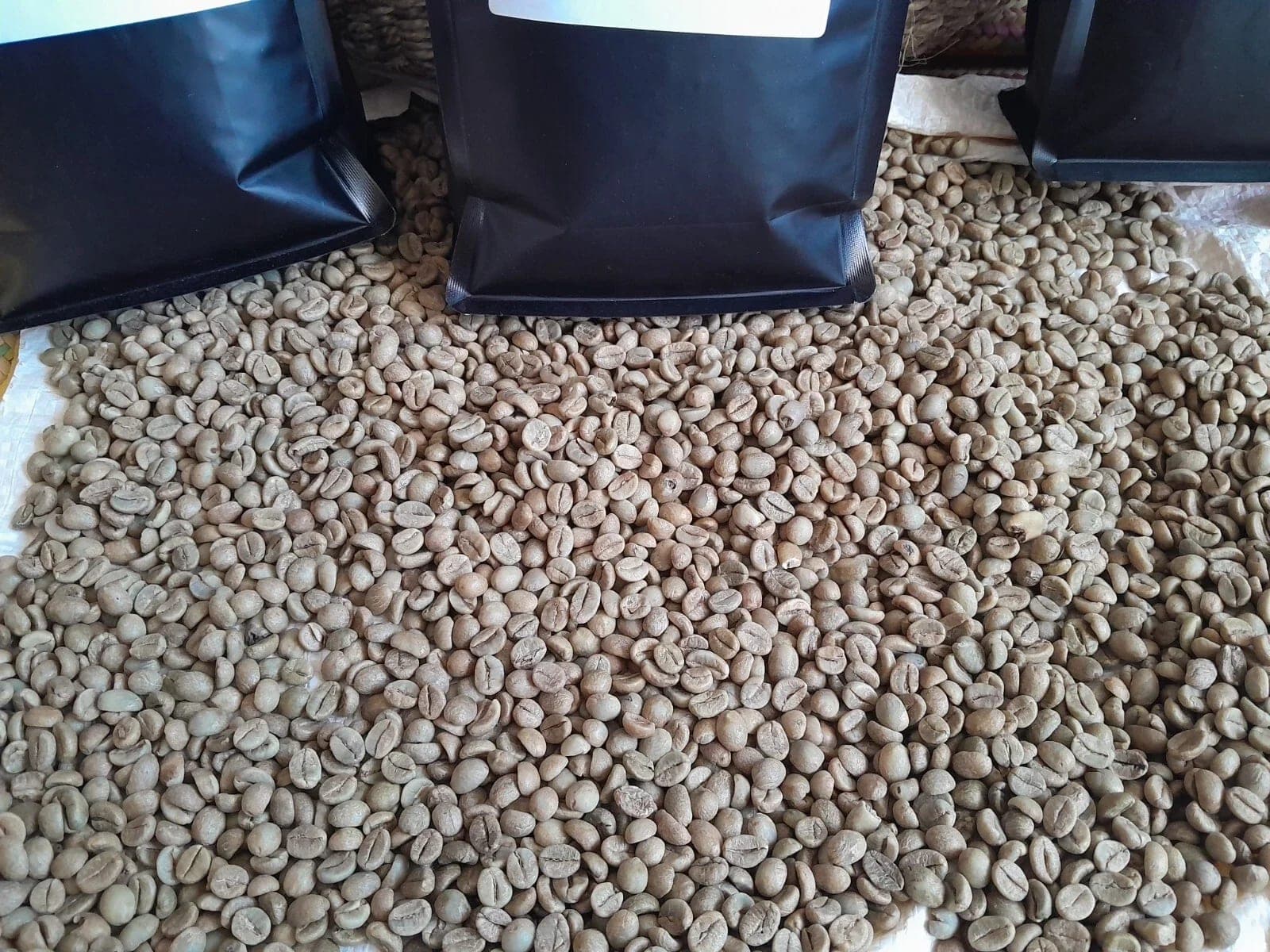
Uganda Robusta Screen 18 is natural Robusta screened so the parcel is retained above an 18/64 inch perforation — approximately 7.14 mm. It is the largest routinely traded Ugandan Robusta size class, and it is a size specification only.
Contract on: region · grade · screen · process · crop · moisture · defect tolerance · cup approval.
Request current uganda robusta screen 18The specification
- Screen
- 18/64 inch = 7.14 mm
- Species / process
- Robusta, natural (dry-processed)
- Origin
- Lake Victoria basin, Masaka and central Uganda
- Typical moisture
- Contracted around 12–13%
- Packaging
- 60 kg jute
- Port
- Mombasa or Dar es Salaam
When screen 18 is worth the differential
- 1Roast uniformity on a tight profile. Large, evenly sized beans absorb heat predictably.
- 2Visual match in a blend. Where the Robusta component must look consistent alongside the Arabica in the bag or hopper.
- 3Customer or private-label specification. Where screen 18 is contractually required rather than chosen.
- 4Not a reason: a belief that larger Robusta is better Robusta. It is not — see coffee bean size.
What it costs in outturn
Screen 18 is the top of the size distribution, so it is a minority of any crop. Pulling a screen 18 parcel removes volume from the screen 15 block that would otherwise have absorbed it, and the differential reflects that scarcity rather than a quality difference.
- In a season where the crop ran small, screen 18 may not be fillable at the volume required.
- Where uniformity rather than maximum size is the real need, a 16/17 band is often cheaper and roasts just as evenly.
- Screen 15 supports much larger programmes at a materially lower price.
The contract
The screen does not constrain defects or moisture
A screen 18 parcel can still be defective, wet or full of foreign matter. The defect basis, moisture ceiling and foreign matter limit have to be written explicitly — they are what actually protects you.
- Screen
- Retained on 18, maximum X% passing
- Defects
- Maximum total, black and broken capped separately
- Moisture
- Ceiling plus method and instrument
- Foreign matter
- Maximum, stones counted separately
- Crop year and cycle
- Main crop or fly crop
- Sampling
- Method for drawing the pre-shipment sample
Screen 18 enquiries
Tell us the volume and shipment window. We will confirm whether the current crop supports the size class at that quantity.
Request Current Crop OfferThe distinction that matters
What this grade does not tell you
A grade is a preparation class. Everything below is a separate contract field, and every one of them moves independently of the grade name.
What it does fix
Uganda Robusta Screen 18 encodes
- Bean size, as the screen the Robusta parcel is retained on
- Preparation method, through the WUGAR and DRUGAR designations
- For Bugisu, the size separation within a washed Elgon preparation
- For FAQ, that the parcel is unsized and sold on a stated defect basis
Use the grade to define the physical deliverable. Use the approved sample to define the cup. Both belong in the contract.
What it does not
Specify these separately
- Cup qualityTwo lots at the same grade from the same mill can cup several points apart. Only cupping tells you.
- Defect countA separate count on a defined sample, against a weighting table that differs by origin.
- MoistureA range plus the measurement method. Two meters on one parcel routinely disagree.
- Crop yearNothing in a grade name distinguishes current crop from a parcel that has been in store a year.
- DensityBulk density in g/L, which drives charge temperature and roast planning.
- Water activityStorage stability. Related to moisture but not derivable from it.
- TraceabilityCountry, station or day lot are different claims. A grade fixes none of them.
- Processing methodWashed, natural and honey can all carry the same grade at most origins.
Questions
Frequently asked questions
How many millimetres is Ugandan Robusta screen 18?
Is screen 18 Robusta better quality than screen 15?
Can screen 18 be supplied in multi-container volumes?
Keep reading
Related to Uganda Robusta Screen 18
- Screen 18 — size, grades and contract termsCoffee screen size chart with mm conversion, how sizing tolerances work, what screens 15–18 mean in East African grades, and how bean size affects roasting.
- Coffee Screen SizesCoffee screen size chart with mm conversion, how sizing tolerances work, what screens 15–18 mean in East African grades, and how bean size affects roasting.
- Uganda Coffee GradesUgandan Robusta screen grades (18, 17, 15, 14, 12 and FAQ) and the Arabica designations Bugisu AA, DRUGAR and WUGAR — what each term specifies and how to contract against it.
- Uganda Robusta Screen 15Ugandan Robusta screen 15: the most widely traded East African Robusta specification, why it balances availability and price, and how to contract a programme.
- Uganda RobustaUgandan Robusta: the Lake Victoria basin, two harvest cycles, screen grades 12 to 18 and FAQ, and how to contract a Robusta programme.
Request an offer
Tell us the Uganda coffee you need
Region, process, grade, screen, moisture, defect tolerance, crop year, packaging and destination. Send what you know and we will confirm what Uganda realistically supports for the current crop.