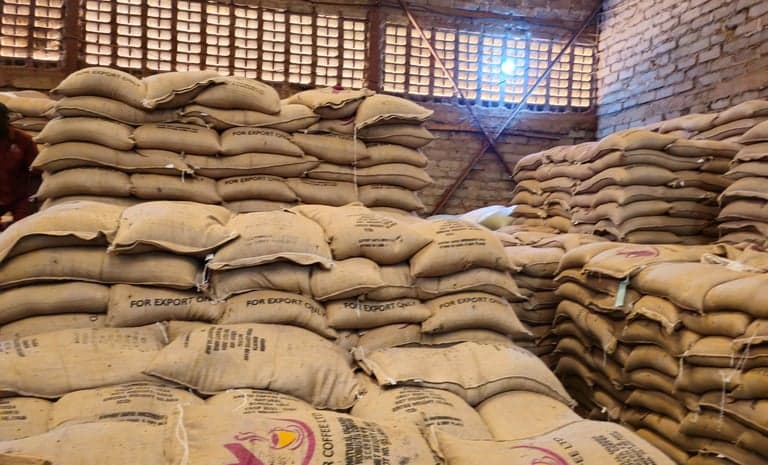
Traditional Export Bag
The default presentation across East Africa. Breathable, robust, and cheap to handle.
- Barrier
- None — breathable
- Fill
- 60 kg nominal
- Suits
- Commercial parcels with fast turnover
Coffee export
Quick answer
East African green coffee is normally presented in a 60 kg jute bag, with an inner barrier liner where the lot value, the transit or the destination climate justifies it. Which configuration is right depends on lot value, transit duration, moisture risk, oxygen exposure, destination conditions and your own specification.
Packaging is agreed at contract stage, because it changes cost, handling, marking and the container arithmetic.
Specify packaging with your enquiryNot one universal standard
Bag weights and liner conventions differ by origin and by contract. Nothing on this page should be read as a single configuration applied everywhere.
Options
Six formats, and what each one is actually for. Availability of any given format is confirmed per origin and per lot.
The default presentation across East Africa. Breathable, robust, and cheap to handle.
A multi-layer barrier liner inside the conventional outer bag. The specialty default.
A single-layer plastic liner. Keeps liquid water out; not a barrier bag.
Air drawn out and the pack sealed. Used for small, high-value separations.
The whole container lined and filled loose. Cheapest per kilo, no lot separation.
A reduced fill for small separations. Easier handling at destination.
Compared
Barrier level is an ordinal band, not a measurement. Transmission rates are properties of a specific laminate from a specific manufacturer — ask for the datasheet where a figure matters to you.
| Format | Fill | Barrier | Moisture | Oxygen | Typical application |
|---|---|---|---|---|---|
| Traditional Export Bag | 60 kg | None — breathable | None. The weave breathes, so the coffee equilibrates with the surrounding air. | None. | Commercial parcels with fast turnover |
| Export Bag + Hermetic Liner | 60 / 30 kg | High barrier | Substantially restricts water-vapour exchange with the surrounding air when correctly sealed. | Substantially restricts oxygen ingress when correctly sealed. | Specialty separations and higher-value lots |
| Export Bag + Polyethylene Liner | 60 kg | Basic — liquid water only | Resists liquid water. Water vapour still passes far more readily than through a multi-layer barrier. | Minimal. | Budget protection against wet handling or a leaking container |
| Vacuum Pack | 10 / 25 / 35 kg | High barrier | High, while the seal holds. | Removes most of the headspace oxygen at packing. | Micro-lots and competition lots |
| Bulk Container Liner | Bulk | Basic — liquid water only | Containment rather than barrier, unless a hermetic container liner is specified. Both exist and they are not the same product. | None, unless a hermetic container liner is specified. | High-volume single-grade commercial shipments |
| Small-Lot Export Bag | 30 kg | None — breathable | As per the liner specified, if any. | As per the liner specified, if any. | Small specialty separations and day lots |
Construction
The difference between a lined bag and a barrier bag is invisible from outside, which is why contracts that say only “lined” cause arguments.
Plain export bag
Nothing between the coffee and the atmosphere. The weave breathes, which is an advantage in a dry warehouse and a liability in a humid one.
Bag + polyethylene liner
A single layer of plastic. It keeps rain and wet handling off the coffee. Water vapour passes far more readily than through a multi-layer barrier.
Bag + hermetic liner
Performance depends on the specific laminate and on the seal being intact. A punctured barrier liner is worse than no liner, because it traps moisture in rather than keeping it out.
Decide
A shortlist tool, not a recommendation engine. It narrows six formats to the two or three worth raising with us.
Narrow the options
Answer what you know. This shortlists formats worth discussing — it does not decide the specification, because that depends on the lot and the routing.
Options to discuss
Answer any question to see which formats are worth raising.
A shortlist, not a specification. The final configuration is confirmed against the origin, the lot, the destination and your contract — and the coffee has to be at the right moisture before any of it helps.
Weights
Conventions rather than standards — historical, regional and negotiable. Only the 60 kg figure is the East African norm.
30kg
Small-lot presentations
Specialty separations and easier destination handling
45kg
Some origins
Encountered outside East Africa
50kg
Selected markets
Used where local handling rules favour it
60kg
East African export norm
The convention across all six origins here
69kg
Central America and some specialty
Also the fill of some hermetic bag formats
Terminology
Three numbers that are routinely confused on a packing list. Gross = net + tare.
Net weight
The coffee itself. What you are buying and what you pay for.
Tare
The packaging — bag and liner. How it is determined belongs in the contract.
Gross weight
Coffee plus packaging. What the container and the road limits see.
Your figures
Tare varies with the bag and whether a liner is fitted. Use the figure from your own contract rather than the default shown.
Calculation
What you are buying
Bags and liners
Net + tare
A planning aid, not a shipping weight. Nominal fill carries a contractual tolerance, and the weights that govern a shipment are the ones on the weight note and the bill of lading.
From bag configuration to container load
Bag weight sets the bag count; bag count and tare set the gross; gross is what meets the container payload plate and the road weight limits at both ends. Packaging and container planning are one calculation, not two.
bag weight → bag count → net cargo → + tare → gross → container plan
Two liners can look identical in a photograph, sit inside the same jute bag, and behave completely differently on a three-month transit. One is a single sheet of polyethylene that keeps liquid water off the coffee. The other is a multi-layer laminate engineered to restrict water-vapour and oxygen transmission. Both are described as "lined" by someone at some point in the chain, which is how a buyer expecting barrier protection ends up with rain protection.
The fix is to specify the construction rather than the word. Name the layer, and where the performance genuinely matters to you, name the material or ask for the manufacturer’s datasheet — barrier figures are properties of a specific laminate, not of a category.
A polyethylene liner is not a barrier bag
Both are plastic and both go inside a jute bag, which is why they get conflated. If a contract says only "lined", establish which construction is meant before the coffee is milled.
Hermetic liners are frequently referred to by a manufacturer’s brand name, in the way that a vacuum flask gets called a Thermos. GrainPro is one manufacturer of hermetic bags and container liners; there are others, and the products differ. The generic category is a hermetic or high-barrier liner, and that is the term a specification should use unless a particular product is genuinely required.
Where a buyer does require a specific product, name it explicitly in the contract along with the closure method. Where any equivalent barrier is acceptable, say that instead — it widens what the mill can source and usually shortens the lead time.
A bag weight is a nominal fill, not a guaranteed net weight, and contracts state a tolerance against it. Tare — the weight of the bag and any liner — is deducted from gross to give net, and how tare is determined should be written down rather than assumed, because a weighed tare and a nominal tare produce different numbers on a large parcel.
Limits
Packaging preserves an appropriate product condition. It does not create one.
On barrier performance
High-barrier packaging can reduce exposure to external moisture and oxygen when correctly specified, sealed and handled. It is not a guarantee of condition on arrival, and its effect depends on the coffee’s state at packing, the material, the seal, handling and the actual transit.
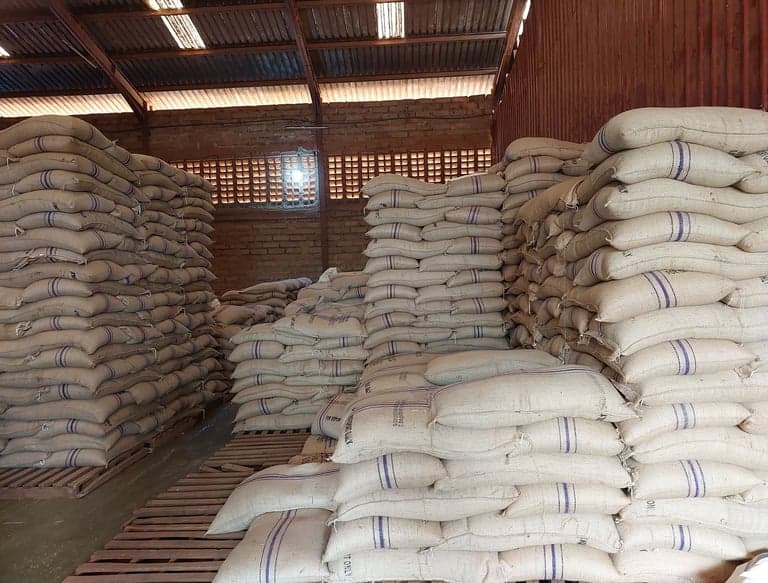
Marking
What makes a parcel identifiable in a warehouse two continents away. Agreed in the contract, not left to the mill.
Illustrative marking structure. Actual markings depend on the contract, the origin and the destination.
Origin
Country, and region or station where contracted
Grade
Species and the origin’s grade designation
Crop year
Distinguishes current crop from stored parcels
Lot reference
Traces the bag back to the mill outturn record
Net weight
Nominal fill per bag; tare is separate
Contract reference
The buyer’s own reference, where required
Certification
Only where a valid licence covers that lot and that use
Certification marks are controlled claims
A scheme’s mark may only be printed on a bag where a valid licence covers that lot and that use. A buyer’s marking instruction does not itself establish certification, and packaging artwork must not imply a status the lot does not hold. Where certification is contracted, confirm the marking requirement against the scheme’s current rules rather than copying a previous shipment. Coffee certifications.
Operations
Where packaging sits in the export sequence, and what happens either side of it.
Coffee prepared
Milled, screened, density- and colour-sorted to the contracted grade
Final quality check
Moisture and physical analysis confirmed against the specification
Bagging
Filled to the nominal weight, liner fitted and closed where specified
Marking
Stencilled to the agreed lines, before the bags leave the mill floor
Lot reconciliation
Bag count and weights reconciled against the outturn record
Container inspection
Checked clean, dry, odour-free and structurally sound before stuffing
Loading
Stowed to the agreed pattern, with dunnage and desiccant where specified
Seal and documents
Seal number recorded and carried onto the shipping documents
Procurement
Send these fields and the instruction is actionable. Leave one out and it gets decided for you at the mill.
Origin and lot
Which coffee the instruction applies to
Net bag weight
Nominal fill, with the tolerance stated
Outer bag material
Jute or sisal
Inner liner
None, polyethylene, or multi-layer high-barrier
Barrier requirement
Where a specific laminate or manufacturer is required, name it
Closure method
Hand-stitched, twisted and tied, or heat-sealed
Marking
The exact lines to be stencilled, in order
Buyer reference
Contract or PO number to appear on the bag
Certification marking
Only where a licence covers the lot — confirm scheme rules
Bag count
Per container and in total
Container preference
20ft or 40ft, and any liner requirement
Destination
Port and onward handling, which affects the format
Questions
Keep reading
Packaging connects directly to storage, loading and documentation — the decisions either side of it.
Request an offer
Origin, grade, volume, destination — and the packaging you need, or the storage plan so we can propose one. Packaging is far cheaper to get right before milling than to change afterwards.
Analytics cookies
We would like to measure which origin and knowledge pages buyers use, so we can improve them. Nothing is loaded until you choose. See our cookie policy.