Tanzania · Grade
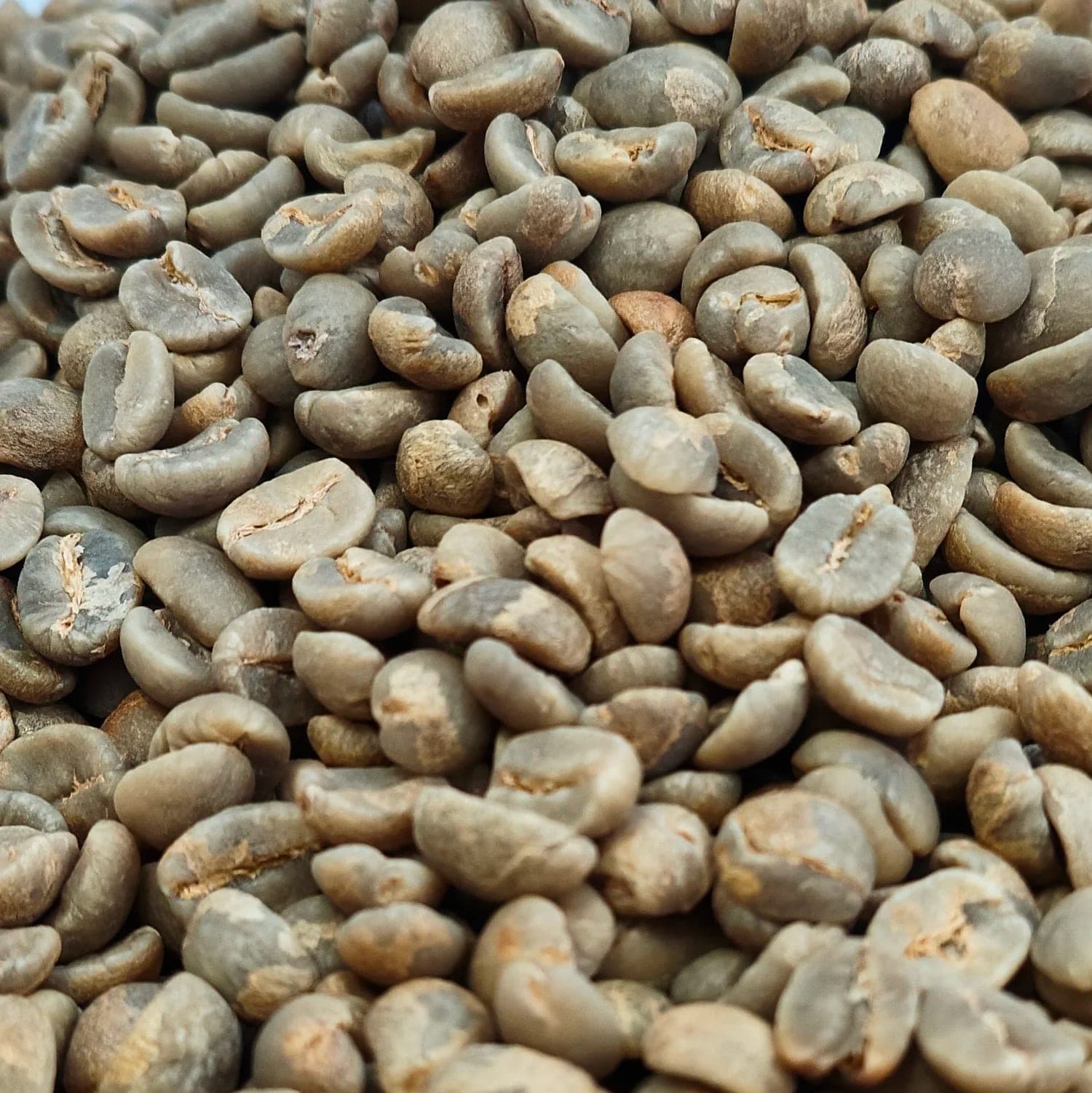
Tanzania AA Green Coffee
- Species
- Arabica · Robusta
- Preparation
- Fully washed · Natural
- Harvest
- June–October in the south; July–December in the north
Quick answer
Tanzania AA is the largest flat-bean separation from a washed Arabica outturn, retained above screen 18 (approximately 7.14 mm). It is a size and preparation class produced at the dry mill and carries no cup guarantee — the profile comes from the region and the processing.
Contract on: region · grade · screen · process · crop · moisture · defect tolerance · cup approval.
Request current tanzania aa green coffeeWhat AA is
- Basis
- Size — screen separation at the dry mill
- Screen
- 18 and above, approximately 7.14 mm
- Species / process
- Arabica, fully washed
- Regions
- Produced across both the northern and southern belts
- Position
- Top of the Tanzanian size ladder below E (elephant)
AA sits above A (screen 17) and B (screen 16) in the ladder, with AB being the combined A and B block. See Tanzania coffee grades for the full set including TT and UG.
Region still decides the cup
AA is a size class, not a quality class
Both Tanzanian belts produce AA. A northern AA from Kilimanjaro and a southern AA from Mbeya are the same size class and quite different coffees — firmer and blackcurrant-driven versus sweeter and chocolatey. Specify the region alongside the grade or the most important variable is left open.
What AA costs in outturn
AA is the top of the size distribution and therefore a minority of any outturn. Pulling an AA parcel removes volume from the AB block that would otherwise have absorbed it, and the smaller the resulting parcel, the higher its per-kilo cost of production.
- In a season where the crop ran small, AA may not be fillable at the volume required, at any price.
- Drought during cherry development shifts the whole distribution downwards.
- The differential over the same coffee at AB reflects scarcity of the size class, not a quality difference.
- Where uniformity rather than maximum size is the requirement, a tight 16/17 band is often cheaper and roasts just as evenly.
Specifying Tanzania AA
- Region
- North or south, and the specific area
- Screen
- Retained on 18, maximum X% passing
- Defects
- Maximum full defects per 300 g
- Moisture
- Range plus method
- Crop year
- Explicit — Tanzania’s crop year is commonly quoted July–June
- Cup
- Approved sample
- Packaging
- 60 kg jute, hermetic liner recommended for long storage
Tanzania AA enquiries
Tell us the region and volume. We will confirm whether the current crop supports the size class at that quantity before quoting.
Request Current Crop OfferThe distinction that matters
What this grade does not tell you
A grade is a preparation class. Everything below is a separate contract field, and every one of them moves independently of the grade name.
What it does fix
Tanzania AA Green Coffee encodes
- Bean size, as the screen the parcel is retained on
- Bean shape, where peaberry is separated from the flat-bean run
- Density, for the TT separation lifted off the AA/A/B run
- That the parcel met the preparation standard of a named grade
Use the grade to define the physical deliverable. Use the approved sample to define the cup. Both belong in the contract.
What it does not
Specify these separately
- Cup qualityTwo lots at the same grade from the same mill can cup several points apart. Only cupping tells you.
- Defect countA separate count on a defined sample, against a weighting table that differs by origin.
- MoistureA range plus the measurement method. Two meters on one parcel routinely disagree.
- Crop yearNothing in a grade name distinguishes current crop from a parcel that has been in store a year.
- DensityBulk density in g/L, which drives charge temperature and roast planning.
- Water activityStorage stability. Related to moisture but not derivable from it.
- TraceabilityCountry, station or day lot are different claims. A grade fixes none of them.
- Processing methodWashed, natural and honey can all carry the same grade at most origins.
Questions
Frequently asked questions
What is Tanzania AA coffee?
Does Tanzania AA taste better than AB?
Can Tanzania AA be supplied in volume?
Keep reading
Related to Tanzania AA Green Coffee
- Tanzania Coffee GradesThe Tanzanian grade ladder for washed Arabica — AA, A, AB, B, C, PB, E, TT and UG — how each separation is produced, and how Kagera Robusta differs.
- Screen 18 — size, grades and contract termsCoffee screen size chart with mm conversion, how sizing tolerances work, what screens 15–18 mean in East African grades, and how bean size affects roasting.
- Tanzania AB Green CoffeeTanzania AB green coffee: the combined A and B block, why it carries most of the volume, and why it is frequently the best value in a Tanzanian offer list.
- Kilimanjaro CoffeeCoffee from the southern slopes of Kilimanjaro: altitude, cooperative structure, varieties, harvest timing and the cup profile of northern Tanzanian Arabica.
Request an offer
Tell us the Tanzania coffee you need
Region, process, grade, screen, moisture, defect tolerance, crop year, packaging and destination. Send what you know and we will confirm what Tanzania realistically supports for the current crop.