Uganda · Growing region
Bugisu Coffee
- Species
- Robusta · Arabica
- Preparation
- Fully washed · Natural (limited)
- Harvest
- October–February
Quick answer
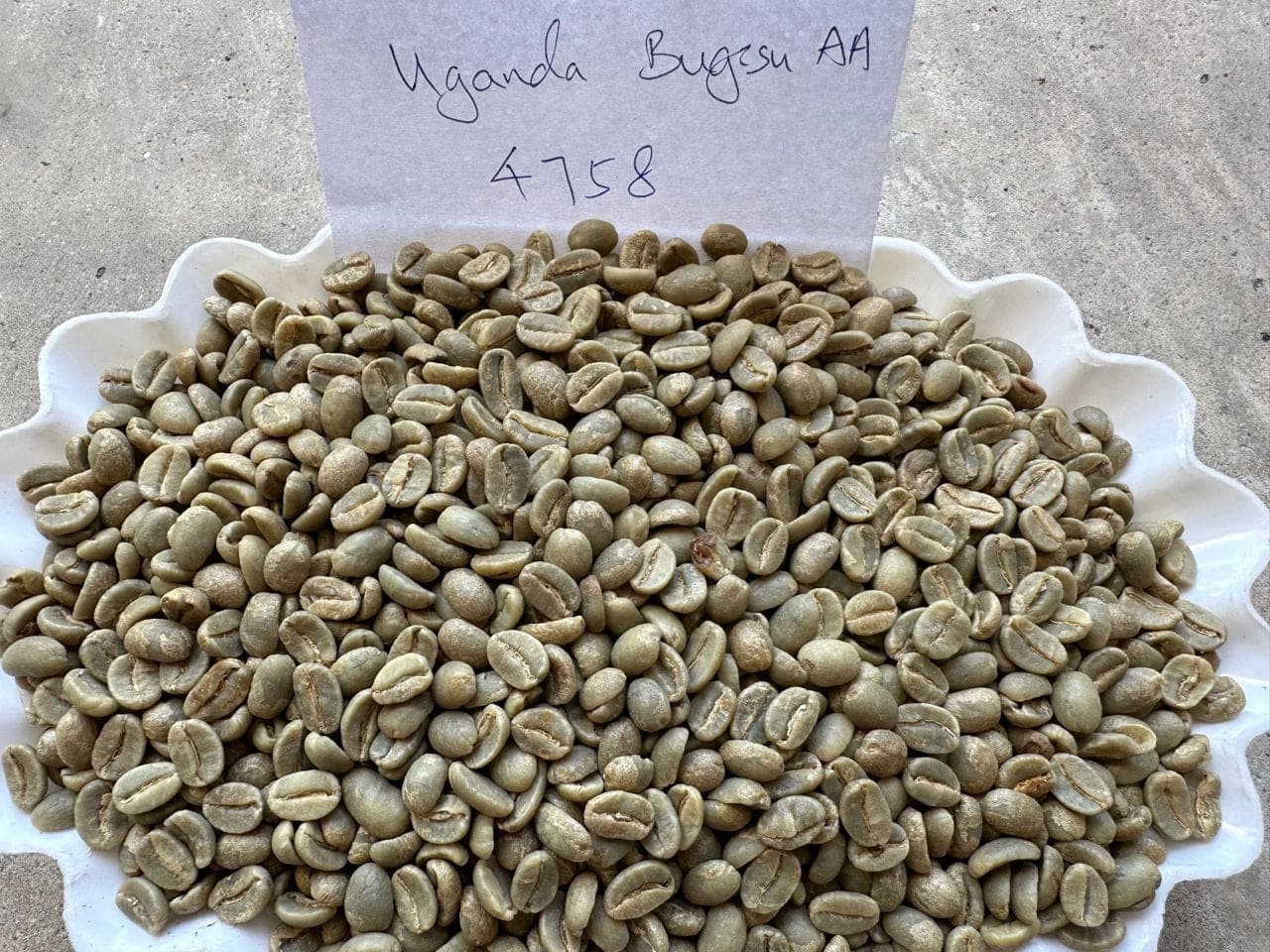
Bugisu is the Mount Elgon growing area in eastern Uganda, 1,500–2,300 m, producing washed Arabica sold under the Bugisu designation with its own AA, A, B and PB size ladder. Harvest runs October to February and the cup is characteristically full-bodied and winey.
Contract on: region · grade · screen · process · crop · moisture · defect tolerance · cup approval.
Request current bugisu coffeeThe mountain
Mount Elgon is an extinct volcano straddling the Uganda–Kenya border. Ugandan coffee grows on its western and south-western slopes, from around 1,500 m up to 2,300 m — among the highest Arabica in the region. Volcanic soils, reliable rainfall and a wide diurnal temperature range at altitude combine to slow cherry maturation.
Farming is smallholder, on steep terrain, with plots frequently intercropped. Cooperative societies and unions have a long history in the area, and washing station capacity has expanded alongside them.
A place and a grade family
Washed Elgon coffee is sold under the Bugisu name with a size ladder that will look familiar to anyone buying Kenyan or Tanzanian coffee.
| Grade | Screen | Notes |
|---|---|---|
| Bugisu AA | Screen 18 and above | The headline export grade |
| Bugisu A | Screen 17 | Below AA in the size ladder |
| Bugisu B | Screen 15–16 | Volume block |
| Bugisu PB | Own PB screen run | Peaberry separation |
The cup
The characteristic Bugisu profile is full-bodied and winey: baked apple, cane sugar and cedar, with more weight and less piercing acidity than a Kenyan from comparable altitude. Well-separated high-altitude lots gain structure and citrus without losing the body.
That combination — weight plus moderate acidity — makes Bugisu a useful espresso component and an approachable single origin.
Practical notes
- Altitude
- 1,500–2,300 m
- Harvest
- October–February
- Export window
- December–July
- Processing
- Fully washed; limited naturals
- Varieties
- SL14, SL28, Nyasaland and local material
- Traceability
- Washing station and farmer group
- Port
- Mombasa via the Northern Corridor
Bugisu enquiries
Tell us the grade and volume. We will confirm what the current crop supports, with the washing station and farmer group identified.
Request Current Crop OfferQuestions
Frequently asked questions
Is Bugisu a region or a grade?
What altitude is Bugisu coffee grown at?
What does Bugisu coffee taste like?
Keep reading
Related to Bugisu Coffee
- Uganda Coffee GradesUgandan Robusta screen grades (18, 17, 15, 14, 12 and FAQ) and the Arabica designations Bugisu AA, DRUGAR and WUGAR — what each term specifies and how to contract against it.
- Uganda harvest and export calendarHarvest and export windows for six East African origins, with every regional cycle.
- WUGAR — Washed Ugandan ArabicaWUGAR: fully washed Ugandan Arabica — where it comes from, how it is specified by screen and defect count, and how it relates to the Bugisu designation.
- Uganda Green CoffeeUgandan green coffee — screen-graded Robusta from the Lake Victoria basin and washed and natural Arabica from Mount Elgon, Rwenzori and West Nile.
Request an offer
Tell us the Uganda coffee you need
Region, process, grade, screen, moisture, defect tolerance, crop year, packaging and destination. Send what you know and we will confirm what Uganda realistically supports for the current crop.