Tanzania · Growing region
Kagera Coffee
- Species
- Arabica · Robusta
- Preparation
- Natural (dry-processed) · Washed (small volumes)
- Harvest
- May–August
Quick answer
Kagera lies on the western shore of Lake Victoria at 1,000–1,500 m and is Tanzania’s Robusta region. Production is predominantly dry-processed smallholder coffee, harvested May to August and contracted on screen and defect terms rather than the Arabica grade ladder.
Contract on: region · grade · screen · process · crop · moisture · defect tolerance · cup approval.
Request current kagera coffeeA lake basin origin
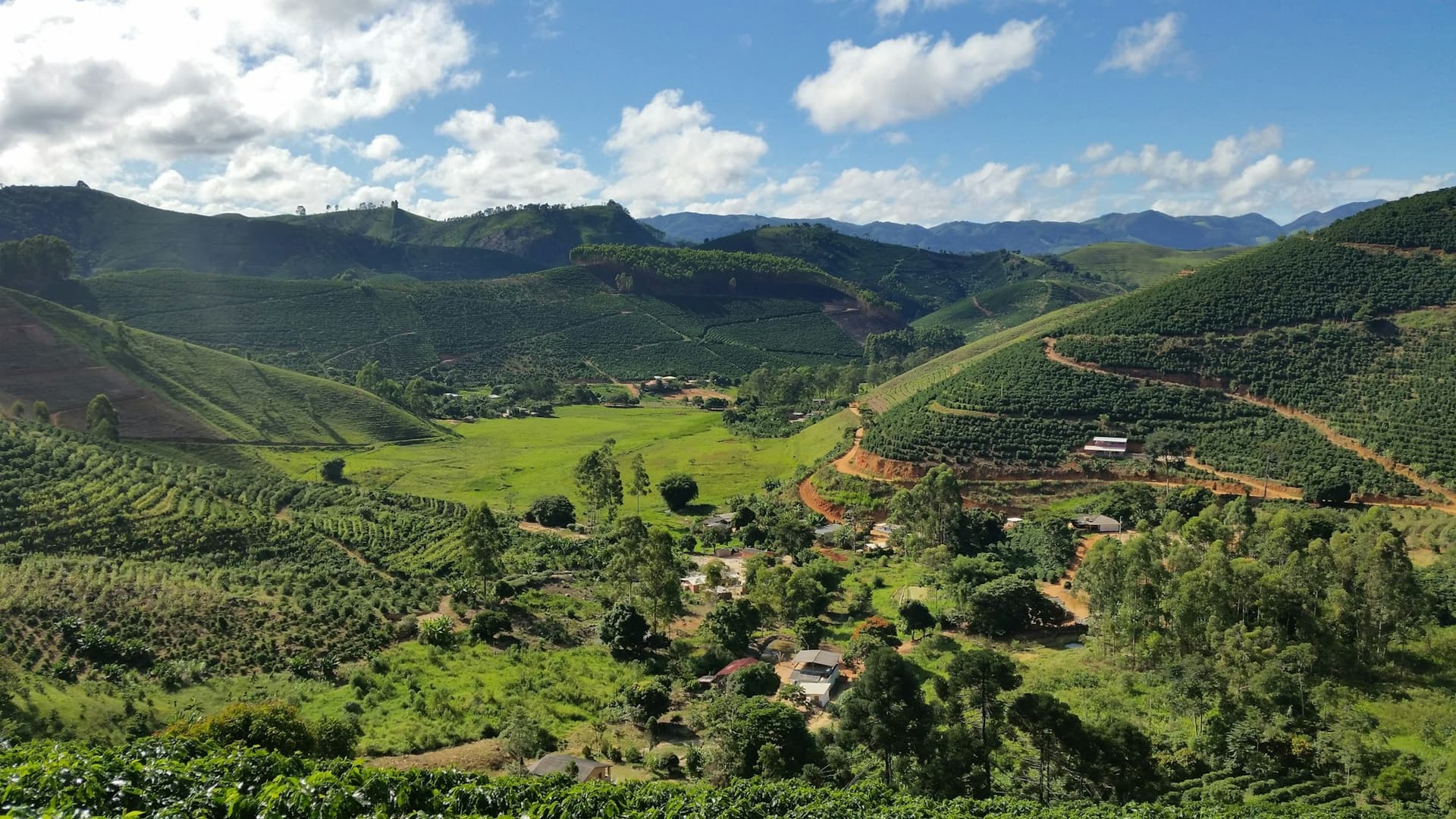
Kagera borders Uganda and sits in the same Lake Victoria basin where *Coffea canephora* occurs naturally. Altitude runs 1,000 to 1,500 m — well below the Arabica belts — and the growing conditions, farming structure and processing all resemble Ugandan Robusta production more than they do Kilimanjaro or Mbeya.
Small volumes of Arabica are also grown in the region, and some washed Robusta is produced, but the great majority of Kagera coffee is dry-processed Robusta.
Processing and grading
Cherry is dried whole on raised beds or patios and hulled at commercial mills. Because there is no letter grade ladder for Tanzanian Robusta, contracts specify screen retention, defect tolerance, moisture and foreign matter directly — see Tanzania Robusta for the full specification list.
Timing
- Flowering
- September–November, with a second flowering March–April
- Harvest
- May–August
- Processing
- May–September — dominated by the drying phase
- Milling
- July–November
- Export window
- July through to the following February
- Port
- Dar es Salaam
Kagera enquiries
Tell us the screen, defect basis and volume. We will confirm what the crop supports.
Request Current Crop OfferQuestions
Frequently asked questions
What coffee does Kagera produce?
Why does Kagera grow Robusta rather than Arabica?
When is Kagera coffee harvested?
Keep reading
Related to Kagera Coffee
- Tanzania harvest and export calendarHarvest and export windows for six East African origins, with every regional cycle.
- Dry ProcessingThe mill-side view of dry processing: cherry reception, bed loading, turning regimes, the drying curve and hulling — and the faults that produce phenolic cups.
- Tanzania RobustaTanzanian Robusta from the Kagera region — dry-processed, contracted on screen and defect terms rather than the Arabica auction grades.
- Robusta Green CoffeeUgandan and Tanzanian Robusta green coffee, screen-graded and contracted on defect and moisture terms — for blends, espresso bases and soluble production.
- Commercial Green CoffeeCommercial green coffee from six East African origins: the volume grades by origin, how programme contracts are written, and how consistency is held across a season.
Request an offer
Tell us the Tanzania coffee you need
Region, process, grade, screen, moisture, defect tolerance, crop year, packaging and destination. Send what you know and we will confirm what Tanzania realistically supports for the current crop.