Tanzania · Growing region
Kilimanjaro Coffee
- Species
- Arabica · Robusta
- Preparation
- Fully washed
- Harvest
- July–December
Quick answer
Kilimanjaro coffee is washed Arabica grown on the mountain’s southern slopes between roughly 1,400 and 1,900 m, harvested July to December. Smallholder plots served by long-established cooperative unions dominate, and the cup is characteristically structured: blackcurrant, citrus and cocoa.
Contract on: region · grade · screen · process · crop · moisture · defect tolerance · cup approval.
Request current kilimanjaro coffeeThe growing area
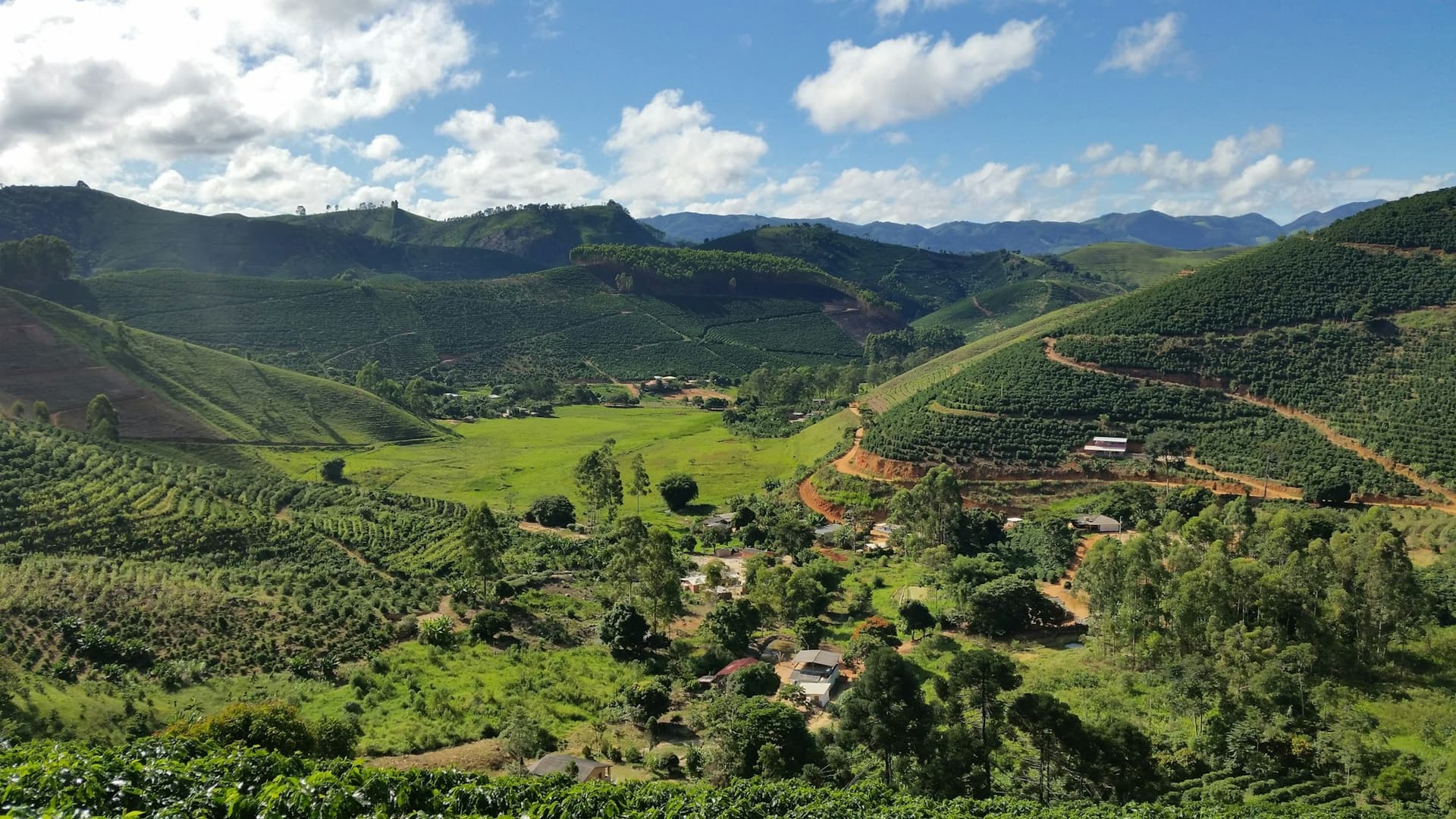
Coffee grows on the mountain’s southern and south-eastern slopes, in the volcanic soils above the plains. Altitude runs from roughly 1,400 m up to around 1,900 m, with the higher plots picking latest. Rainfall is reliable and the diurnal temperature range at altitude slows cherry maturation — the mechanism behind the region’s bean density.
Plots are typically small, frequently intercropped with bananas, and organised around cooperative societies with a long institutional history. Moshi, at the foot of the mountain, is the historic centre of Tanzania’s dry milling and auction infrastructure, though Tanzania Coffee Board auctions now also run at zonal centres closer to other growing areas.
Varieties and processing
Bourbon and Kent dominate older plantings, with newer TaCRI selections increasingly present. Processing is fully washed: pulping, fermentation, washing and drying in parchment, with cherry delivered to cooperative pulperies.
Harvest and availability
- Flowering
- October–December
- Harvest
- July–December, with higher plots latest
- Milling
- September–March
- Export window
- September through to the following June
- Port
- Dar es Salaam, occasionally Tanga
See the Tanzania crop calendar for the northern and southern cycles side by side.
The cup
Kilimanjaro lots are typically firmer and more structured than southern Tanzanian coffee: blackcurrant and citrus acidity over a cocoa base, with a medium to full body. Well-separated lots from higher plots can be notably clean and long.
The full grade ladder is produced here — AA, A, AB, B, C, PB — so the region and the grade are independent specifications and both belong in the contract.
Kilimanjaro enquiries
Tell us the grade and volume. We will confirm what the current crop supports, with the cooperative and pulpery identified.
Request Current Crop OfferQuestions
Frequently asked questions
What altitude is Kilimanjaro coffee grown at?
When is Kilimanjaro coffee harvested?
How does Kilimanjaro coffee differ from Mbeya?
Keep reading
Related to Kilimanjaro Coffee
- Arusha CoffeeCoffee from Arusha and the slopes of Mount Meru: estate production, larger homogeneous lots, harvest timing and the northern Tanzanian cup profile.
- Tanzania harvest and export calendarHarvest and export windows for six East African origins, with every regional cycle.
- Tanzania AA Green CoffeeTanzania AA green coffee: what the grade is, which regions produce it, what it costs in outturn, and how to write a Tanzania AA specification.
- Tanzania Green CoffeeTanzanian green coffee from the northern and southern highlands plus Kagera Robusta — grades, regions, harvest windows, cup profiles and how to specify a Tanzanian parcel.
Request an offer
Tell us the Tanzania coffee you need
Region, process, grade, screen, moisture, defect tolerance, crop year, packaging and destination. Send what you know and we will confirm what Tanzania realistically supports for the current crop.