Tanzania · Growing region
Mbinga Coffee
- Species
- Arabica · Robusta
- Preparation
- Fully washed · Natural
- Harvest
- June–October
Quick answer
Mbinga sits in the Ruvuma region of remote south-western Tanzania, above Lake Nyasa, at 1,200–1,800 m. Long-standing cooperative structures dominate, harvest runs June to October, and the cup leans sweet and chocolatey rather than sharply acidic.
Contract on: region · grade · screen · process · crop · moisture · defect tolerance · cup approval.
Request current mbinga coffeeThe area
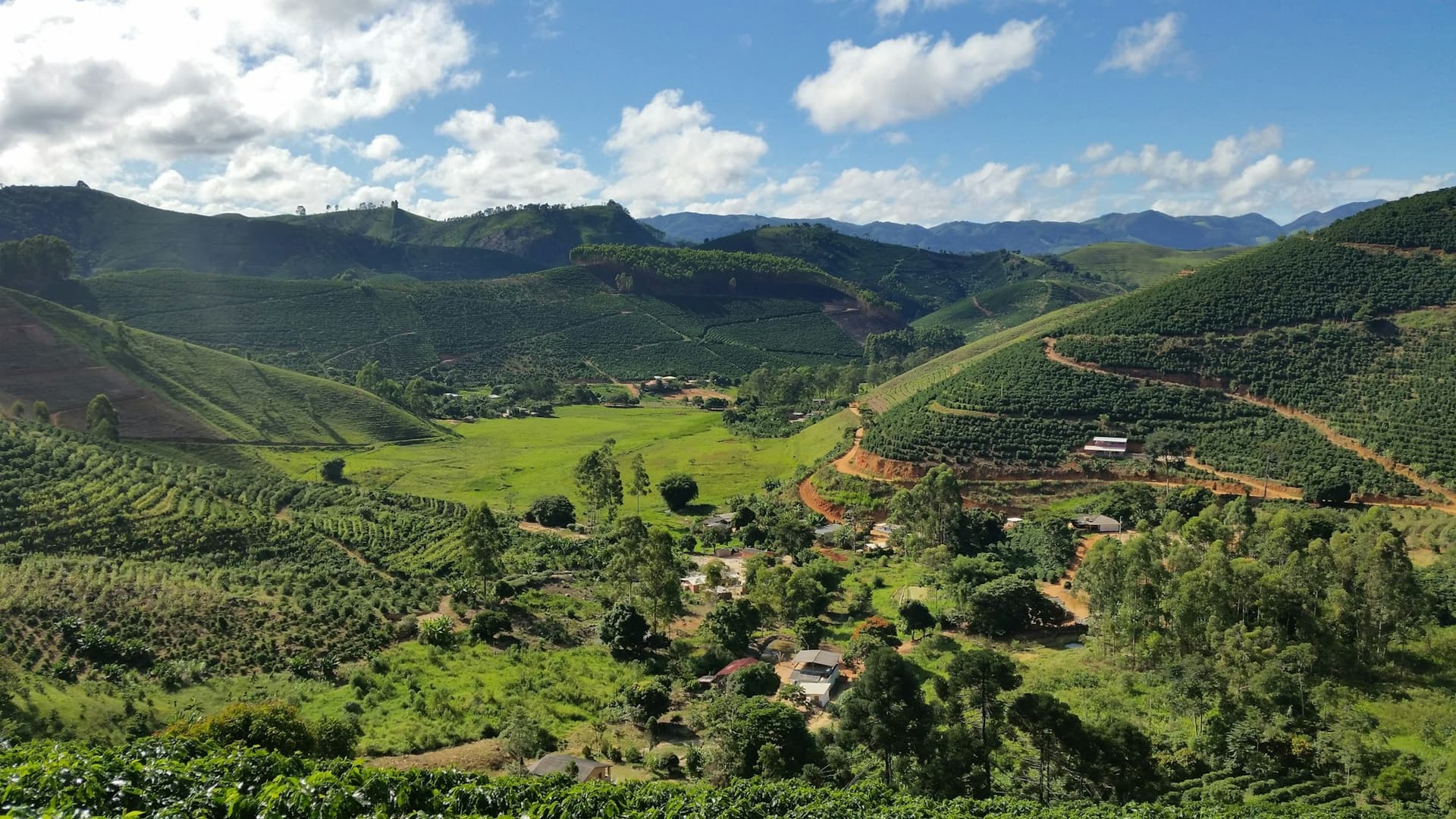
Mbinga district sits in the Ruvuma region, in the highlands above Lake Nyasa in the far south-west. It is remote — the road distance to Dar es Salaam is substantial, and that logistics reality shapes both the cost base and the shipment planning.
Farming is smallholder and organised around cooperative societies with a long history in the area. Altitude runs roughly 1,200 to 1,800 m, lower on average than Mbeya, and the harvest runs June to October alongside the rest of the southern belt.
The cup
Mbinga coffee is characteristically sweet: chocolate, brown sugar and soft stone fruit, with a rounded acidity and a medium to full body. It is less acidic than northern Tanzanian coffee and often less bright than the higher Mbeya plots, which makes it a comfortable blend component and an approachable single origin.
Where a lot has been well separated and comes from the upper end of the altitude range, more red fruit and citrus appear over the same sweet base.
Practical notes
- Altitude
- 1,200–1,800 m
- Harvest
- June–October
- Processing
- Fully washed; some naturals
- Structure
- Smallholder via long-established cooperatives
- Logistics
- Long domestic road haul to Dar es Salaam — build it into the shipment window
- Grades
- Full ladder produced: AA, AB, B, C, PB
Mbinga enquiries
Tell us the grade and volume. We will confirm the shipment window realistically, including the road leg.
Request Current Crop OfferQuestions
Frequently asked questions
Where is Mbinga?
What does Mbinga coffee taste like?
Does the remoteness affect shipment timing?
Keep reading
Related to Mbinga Coffee
- Mbeya CoffeeCoffee from Mbeya and Songwe: Tanzania’s largest Arabica area, central pulperies, day-lot separations, harvest timing and the southern cup profile.
- Tanzania harvest and export calendarHarvest and export windows for six East African origins, with every regional cycle.
- Tanzania AB Green CoffeeTanzania AB green coffee: the combined A and B block, why it carries most of the volume, and why it is frequently the best value in a Tanzanian offer list.
- Tanzania PeaberryTanzania peaberry: what a peaberry is, how it is separated, why it roasts differently from flat beans, and what to expect in availability and price.
Request an offer
Tell us the Tanzania coffee you need
Region, process, grade, screen, moisture, defect tolerance, crop year, packaging and destination. Send what you know and we will confirm what Tanzania realistically supports for the current crop.