Uganda · Preparation
DRUGAR — Dried Ugandan Arabica
- Species
- Robusta · Arabica
- Preparation
- Natural (Robusta) · Washed Arabica (WUGAR)
- Harvest
- Robusta main crop November–February with a fly crop April–July; Elgon Arabica October–February
Quick answer
DRUGAR stands for Dried Ugandan Arabica: Arabica dried as whole cherry rather than washed, mainly from the Rwenzori, West Nile and Kigezi areas. Cup character is driven heavily by drying discipline, so lot separation and cup approval matter more here than for most naturals.
Contract on: region · grade · screen · process · crop · moisture · defect tolerance · cup approval.
Request current drugar — dried ugandan arabicaWhat the designation covers
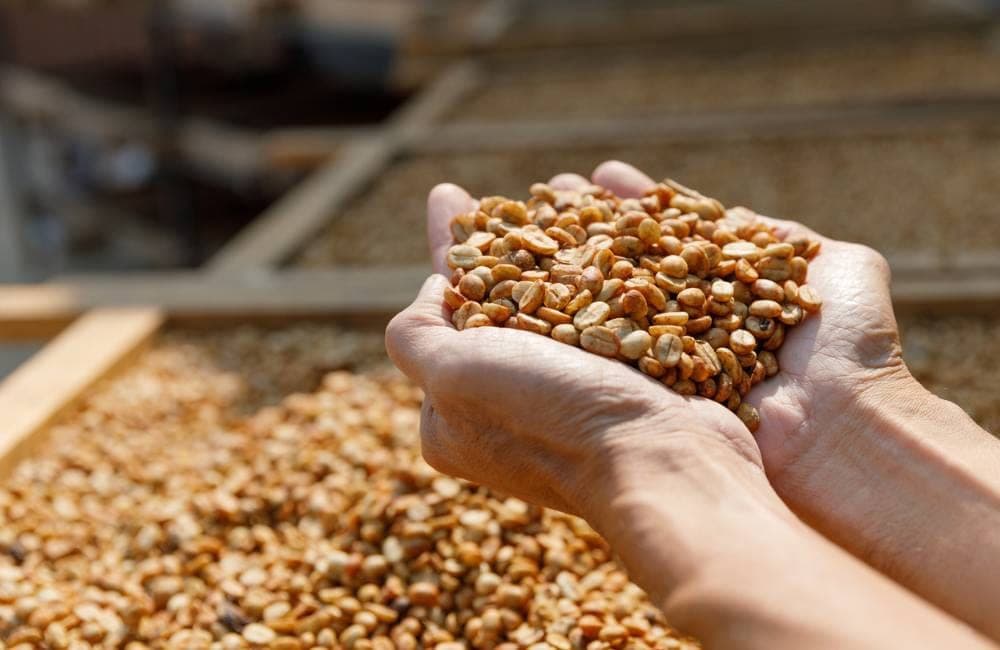
DRUGAR is Ugandan Arabica processed by drying the whole cherry and hulling afterwards — the same process described on the natural coffee and dry processing pages. It is a processing designation, not a grade: parcels are further specified by screen and defect count.
The counterpart designation is WUGAR, washed Ugandan Arabica. Every Ugandan Arabica enquiry should state one or the other before discussing size.
Where it comes from
- Rwenzori — western highlands along the Congo border, 1,400–2,000 m. Historically the core of DRUGAR production.
- West Nile (Okoro) — north-west, around Zombo and Nebbi, 1,400–1,800 m. Picks earliest of the Ugandan Arabica areas.
- Kigezi — south-west, bordering Rwanda, 1,500–2,200 m, with two picking windows.
West Nile picking from August makes DRUGAR available ahead of the washed Elgon crop, which is genuinely useful for bridging supply.
The cup — and the variance
Well-executed DRUGAR shows dried fig, spice and cocoa with a full body and low acidity. Poorly dried DRUGAR shows ferment, mustiness and phenolic notes, and the difference is not visible in the green.
Drying discipline is the whole variable
DRUGAR is produced across a wide range of infrastructure, from well-managed raised beds to ground drying. Because dry-processing faults leave little trace in the green bean, a defect count will not catch them. Cup a representative sample, in multiple cups, before contracting.
Specifying DRUGAR
- Designation
- DRUGAR, stated explicitly
- Area
- Rwenzori, West Nile or Kigezi
- Screen
- Commonly 15+, with a permitted percentage passing
- Defects
- Maximum full defects per 300 g
- Moisture and water activity
- Both — naturals often run higher aw at the same moisture
- Drying
- Raised beds; ask about layer depth and turning regime
- Cup
- Approved sample plus an explicit ferment/phenol tolerance clause
- Packaging
- Hermetic liner advisable
DRUGAR enquiries
Tell us the area and volume. We will send samples that represent the parcel, with the drying arrangement described where recorded.
Request Current Crop OfferGrowing regions
Uganda growing regions
Altitude and harvest timing are the two variables a sourcing decision turns on. Where two regions overlap they compete for the same milling and shipping slot; where they do not, a programme can be scheduled across them.
- Bugisu (Mount Elgon)1,500–2,300 m
- Kigezi1,500–2,200 m
- Rwenzori1,400–2,000 m
- West Nile (Okoro)1,400–1,800 m
- Masaka & Greater Lake Victoria1,100–1,400 m
- Bugisu (Mount Elgon)
- Altitude
- 1,500–2,300 m
- Harvest
- October–February
- Processing
- Fully washed · Natural (limited)
- Species
- Arabica
- Rwenzori
- Altitude
- 1,400–2,000 m
- Harvest
- August–November
- Processing
- Natural (DRUGAR) · Washed (growing)
- Species
- Arabica
- West Nile (Okoro)
- Altitude
- 1,400–1,800 m
- Harvest
- August–November
- Processing
- Natural (DRUGAR) · Washed
- Species
- Arabica
- Kigezi
- Altitude
- 1,500–2,200 m
- Harvest
- May–August and October–January
- Processing
- Washed · Natural
- Species
- Arabica
- Masaka & Greater Lake Victoria
- Altitude
- 1,100–1,400 m
- Harvest
- November–February with a fly crop April–July
- Processing
- Natural
- Species
- Robusta
Questions
Frequently asked questions
What does DRUGAR stand for?
Where does DRUGAR come from?
Why is DRUGAR variable?
Keep reading
Related to DRUGAR — Dried Ugandan Arabica
- Natural coffee — process, risk and specificationWashed, natural and honey processing explained — what each does to the cup, where the risk sits and how to specify it.
- Dry ProcessingThe mill-side view of dry processing: cherry reception, bed loading, turning regimes, the drying curve and hulling — and the faults that produce phenolic cups.
- Uganda Coffee GradesUgandan Robusta screen grades (18, 17, 15, 14, 12 and FAQ) and the Arabica designations Bugisu AA, DRUGAR and WUGAR — what each term specifies and how to contract against it.
- WUGAR — Washed Ugandan ArabicaWUGAR: fully washed Ugandan Arabica — where it comes from, how it is specified by screen and defect count, and how it relates to the Bugisu designation.
- Natural Green CoffeeNatural, dry-processed green coffee from Ethiopia, Uganda and Tanzania — from specialty Guji and Sidama separations to commercial Djimma grades and Ugandan Robusta.
Request an offer
Tell us the Uganda coffee you need
Region, process, grade, screen, moisture, defect tolerance, crop year, packaging and destination. Send what you know and we will confirm what Uganda realistically supports for the current crop.