Tanzania · Growing region
Mbeya Coffee
- Species
- Arabica · Robusta
- Preparation
- Fully washed · Natural
- Harvest
- June–October
Quick answer
Mbeya and Songwe form Tanzania’s largest Arabica-producing area, at 1,400–2,000 m, harvested June to October. Dense smallholder farming around Mbozi and Mbeya Rural is served by central pulperies that increasingly separate by delivery day — which is what makes tighter specialty separations available here.
Contract on: region · grade · screen · process · crop · moisture · defect tolerance · cup approval.
Request current mbeya coffeeScale and structure
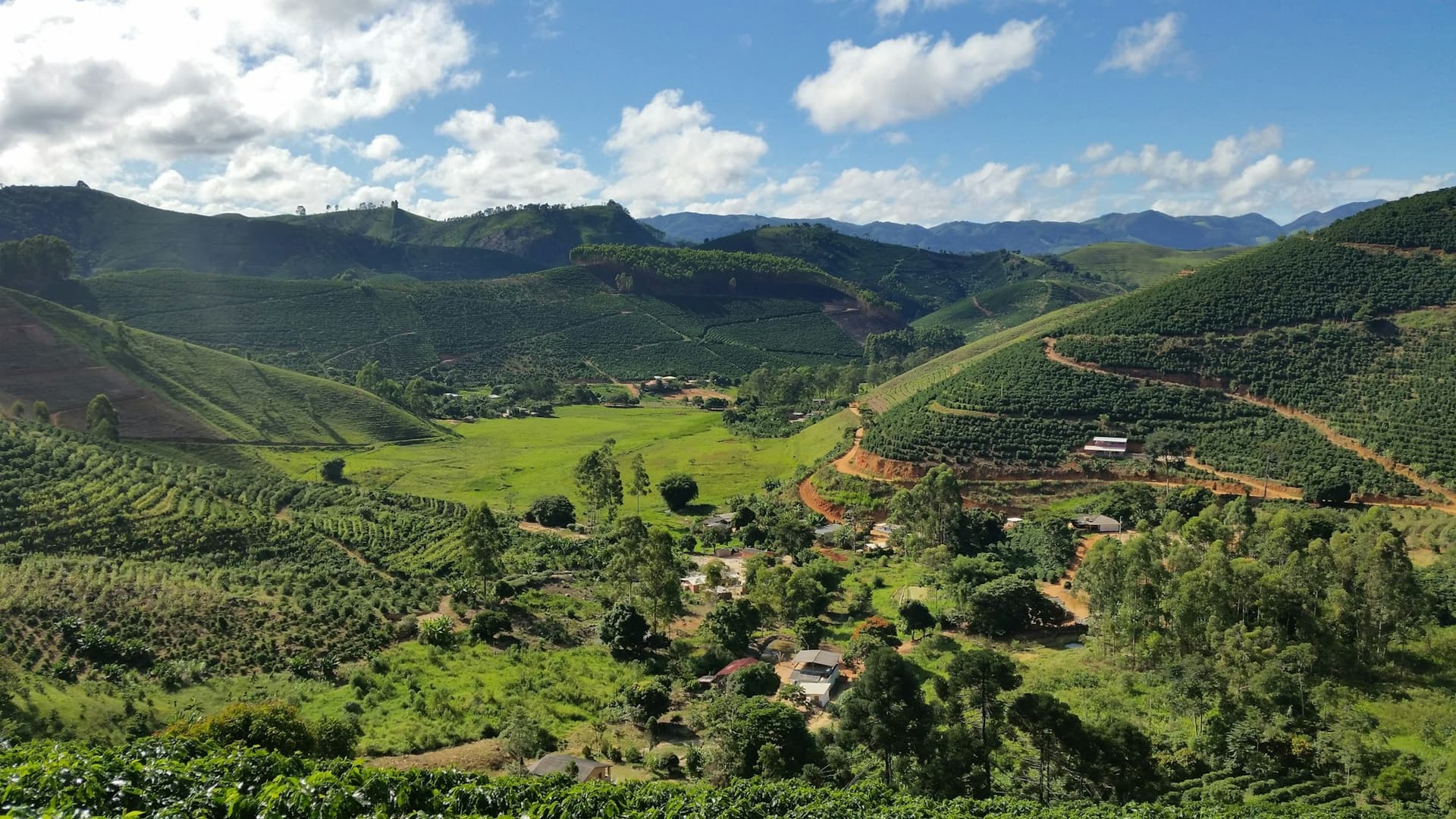
The southern highlands around Mbeya and the newer Songwe region carry the largest share of Tanzanian Arabica volume. Farming is dense and smallholder-based, concentrated around Mbozi and Mbeya Rural, with cherry delivered to central pulperies serving groups of farmers.
The expansion of central pulpery capacity here is the most consequential recent development in Tanzanian coffee for a specialty buyer. Where a station separates by delivery day rather than pooling the week, day-lot and delivery-period separations become possible — and that is where the region’s best-defined lots come from.
The growing area
- Altitude
- 1,400–2,000 m
- Harvest
- June–October, peaking July–September
- Processing
- Fully washed; naturals and honeys in growing volumes
- Varieties
- Bourbon, Kent, N39, TaCRI selections
- Traceability
- AMCOS or central pulpery; delivery period on request
- Export window
- August through to the following May
The cup
Southern Tanzanian coffee leans sweet and round: stone fruit, brown sugar and chocolate over a softer acidity than the northern belt. Well-separated high-altitude lots from Mbozi can be more structured and add red fruit and citrus without losing the underlying sweetness.
That profile makes Mbeya coffee unusually blend-friendly — it contributes sweetness and body without imposing the acidity that a Kenyan or high-altitude Ethiopian would.
Naturals and honeys
The south is where Tanzanian dry processing is developing. Naturals from Mbeya and Songwe layer berry and dried fruit over the region’s natural sweetness. Volumes are still modest and lot-specific — confirm against the current crop rather than assuming availability.
Mbeya enquiries
Tell us whether you need volume or a tight separation. Both are available here, and they are different conversations.
Request Current Crop OfferQuestions
Frequently asked questions
Is Mbeya the largest coffee region in Tanzania?
What does Mbeya coffee taste like?
Can I get day-lot separations from Mbeya?
Keep reading
Related to Mbeya Coffee
- Mbinga CoffeeCoffee from Mbinga and the Ruvuma highlands: cooperative structure, altitude, harvest timing and a cup profile that leans sweet and chocolatey.
- Tanzania harvest and export calendarHarvest and export windows for six East African origins, with every regional cycle.
- Natural coffee — process, risk and specificationWashed, natural and honey processing explained — what each does to the cup, where the risk sits and how to specify it.
- Tanzania AB Green CoffeeTanzania AB green coffee: the combined A and B block, why it carries most of the volume, and why it is frequently the best value in a Tanzanian offer list.
- Tanzania Green CoffeeTanzanian green coffee from the northern and southern highlands plus Kagera Robusta — grades, regions, harvest windows, cup profiles and how to specify a Tanzanian parcel.
Request an offer
Tell us the Tanzania coffee you need
Region, process, grade, screen, moisture, defect tolerance, crop year, packaging and destination. Send what you know and we will confirm what Tanzania realistically supports for the current crop.